The Yellow Fever Vaccine – to get or not to get – was a much-discussed decision that needed to be made months ago in preparation for this port stop at Devil’s Island, French Guiana. This was the only country that required either the vaccine or a physician’s waiver. I chose the waiver; others paid upwards of $300 to get the vaccine.
But the decision didn’t really matter because at the last minute, the French government denied our much-anticipated visit to Devil’s Island located seven miles off the coast of French Guiana, a country on the northeast coast of South America. The reason was lack of sanitation and water facilities on Isle Royale, where tenders (small boats) from the ship were going to take us. The more detailed explanation was that a naval captain from French Guiana was supposed to board our ship and pilot it to a safe position near the island. But he would need to stay overnight on the island, and without proper sanitation in place, he couldn’t stay there. Our ship’s captain, Captain Rens van Eerten, tried to get permission for us to get close to the island to see what we could see, but we had to stay 3-4 miles away from the shore. The ship and all those aboard had to adapt to the change of plans.
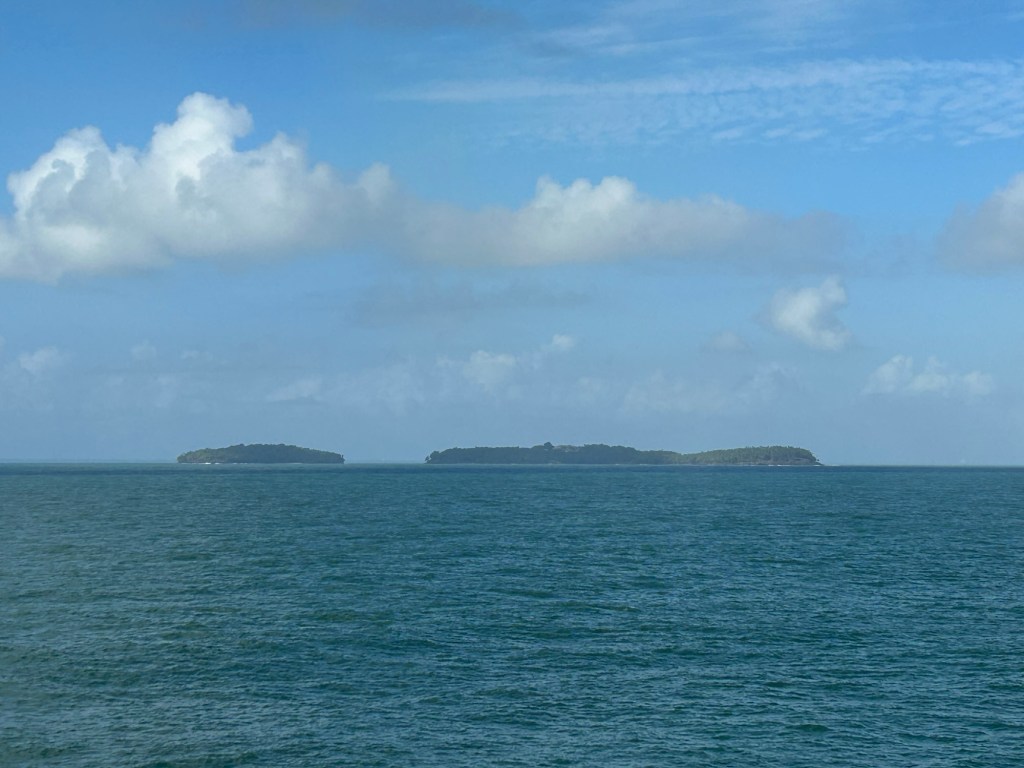
I had researched about this group of islands and listened to a “port talk” on the ship. This group of three islands – Isle Royale, Isle Saint-Joseph, and Isle du Diable (Devil’s Island) – is officially called The Salvation Islands, but many people refer to the group as simply Devil’s Island.
These islands are notorious for having been France’s penal colony for about 100 years having been chosen by Emperor Napolean III to be used for harsh punishment especially for political prisoners. The brutal treatment of convicts including torture, rampant diseases, meager diet, and harsh tropical living conditions led to over 50,000 deaths before it was closed in the 1950s. About 1,000-3,000 prisoners were housed here at a time, and a total of 80,000 were shipped from France throughout the century to face almost certain death, some for minor infractions of the law.
Most prisoners were housed on Isle Royale, and some abandoned ruins can still be seen. Isle Saint-Joseph was used for the most difficult prisoners who were kept in darkness and solitary confinement. Political prisoners faced a “living hell” on Devil’s Island, which was inaccessible except for a cable car. It was surrounded by 130’ cliffs and fast-moving ocean currents that included sharks. Escape was almost impossible.
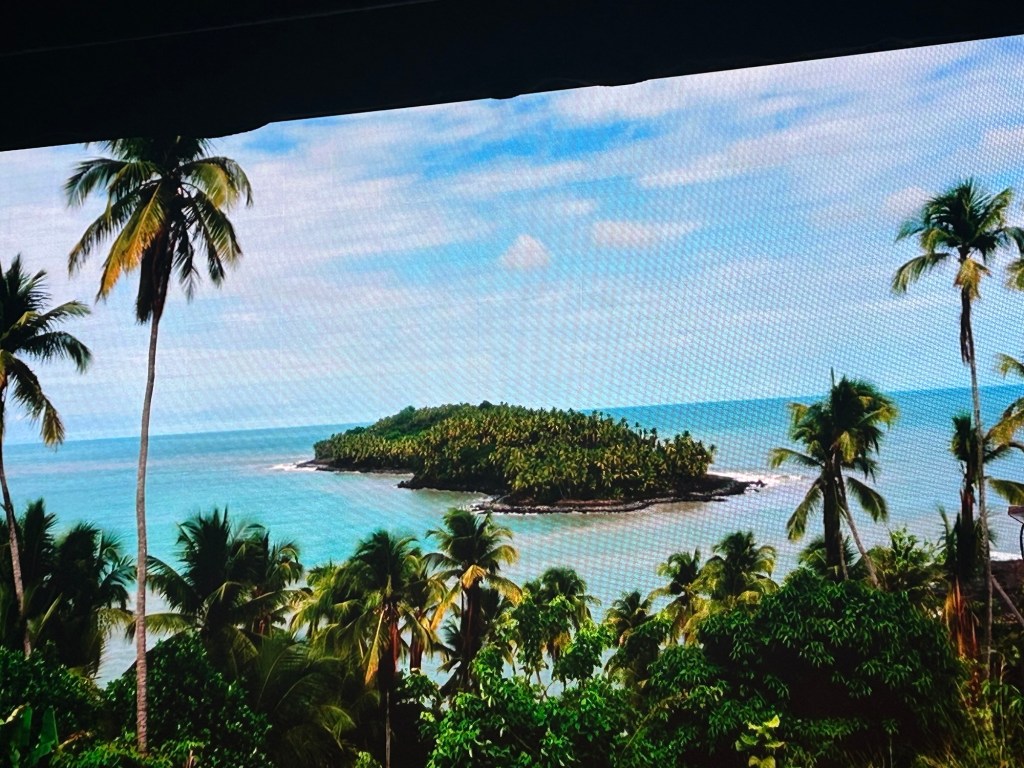
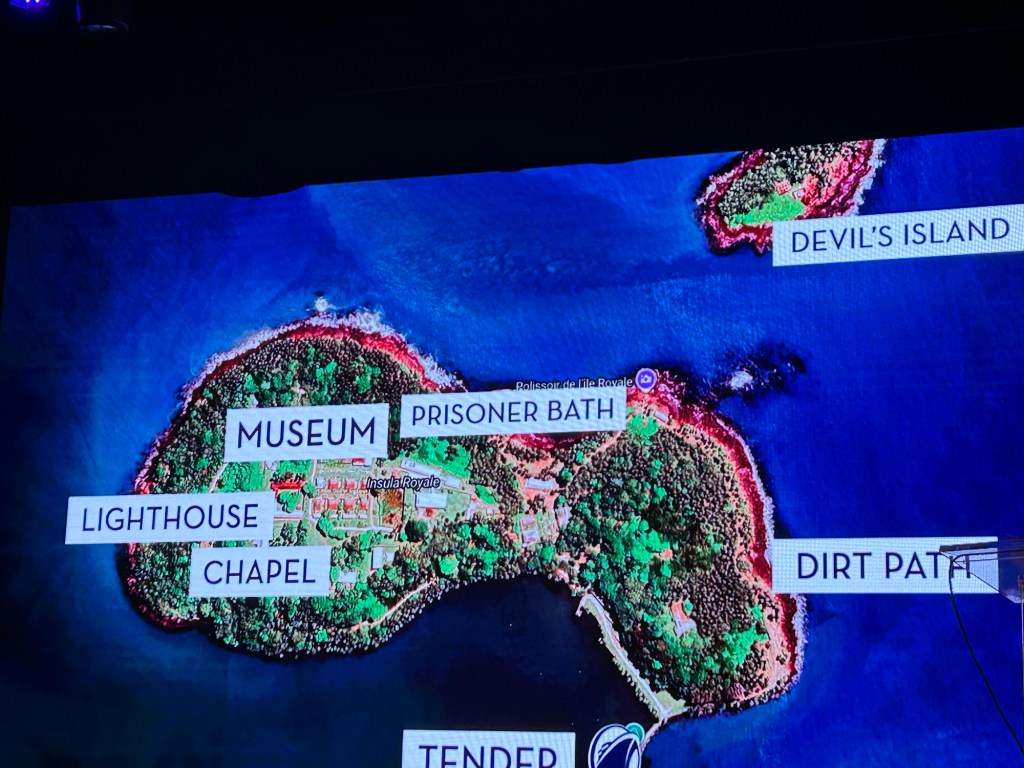
Today, tourists can walk around Isle Royale to see a museum and the abandoned ruins, and there even is a small hotel that is sometimes available for a unique stay on an island infamous for its history. The French penal colony is the subject of multiple books and movies, the most notable of which is the book “Papillon” by Henri Charriere and the 1973 movie of the same name starring Steve McQuuen and Dustin Huffman.
And guess what! Because of the changed plans, I never had to worry about a mosquito biting me and giving me yellow fever! I’d say that was a good outcome!
 Travels with Irene
Leave a comment