When a country becomes a destination, its size on a map takes on a different perspective. I knew Brazil was a large country on the continent of South America, but didn’t realize that it’s bigger than the lower 48 contiguous states of the United States. It has taken our ship two full days to travel the South Atlantic Ocean from Belem to Recife, and it’ll take another two days from Recife to Rio De Janeiro.
We had arranged a port tour with Do Brazil Right to see the cities of Olinda and Recife, both in the Brazil state of Pernambuco. Along with 8 other cruise passengers, we met our tour guide and van as we exited the cruise terminal. The guide shared a short history of Brazil, including being founded by the Dutch who later lost control to Portugal. And the name Brazil? Already in the 1500s, trees that were found along the coast were exported to Europe by the explorers because of the red dye that could be processed from the wood. The deep red dye was the color of glowing embers, or “brasa”, and the trees were called “brasa” wood, later changed to brazilwood, later shortened and re-spelled to Brazil.
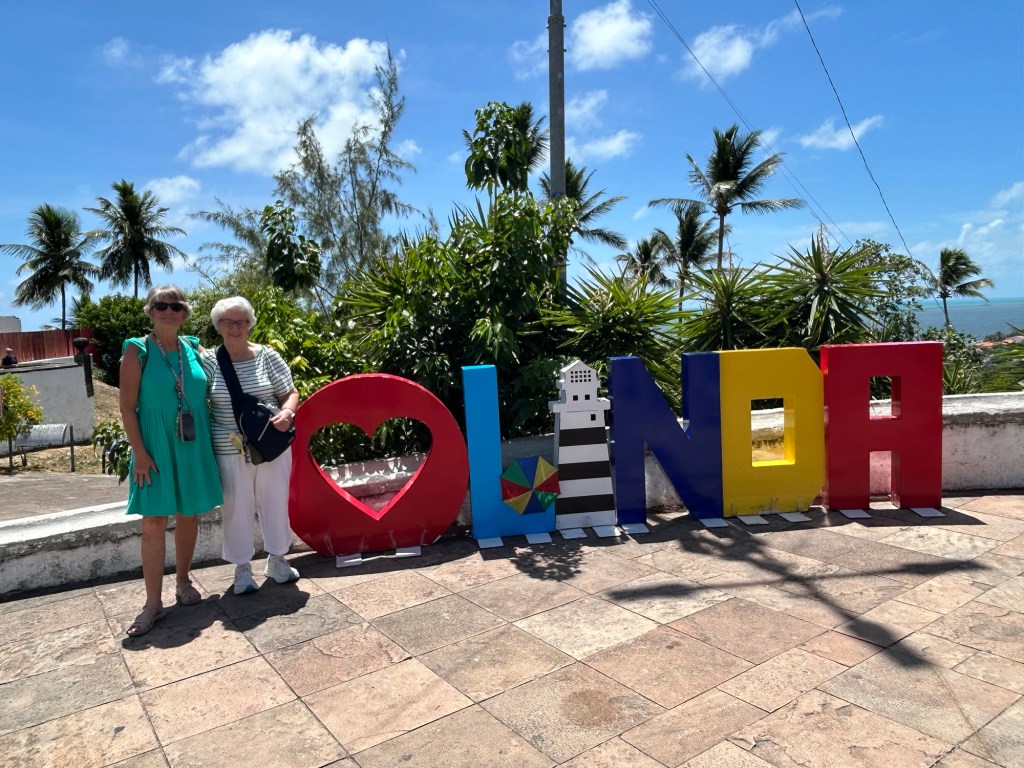
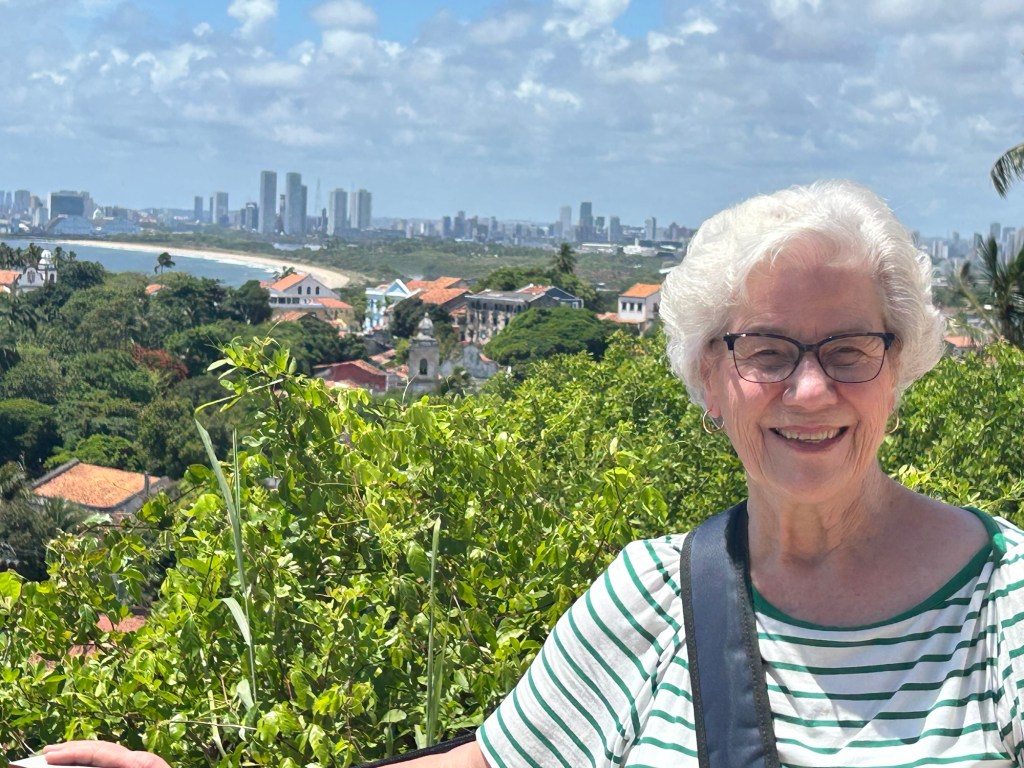
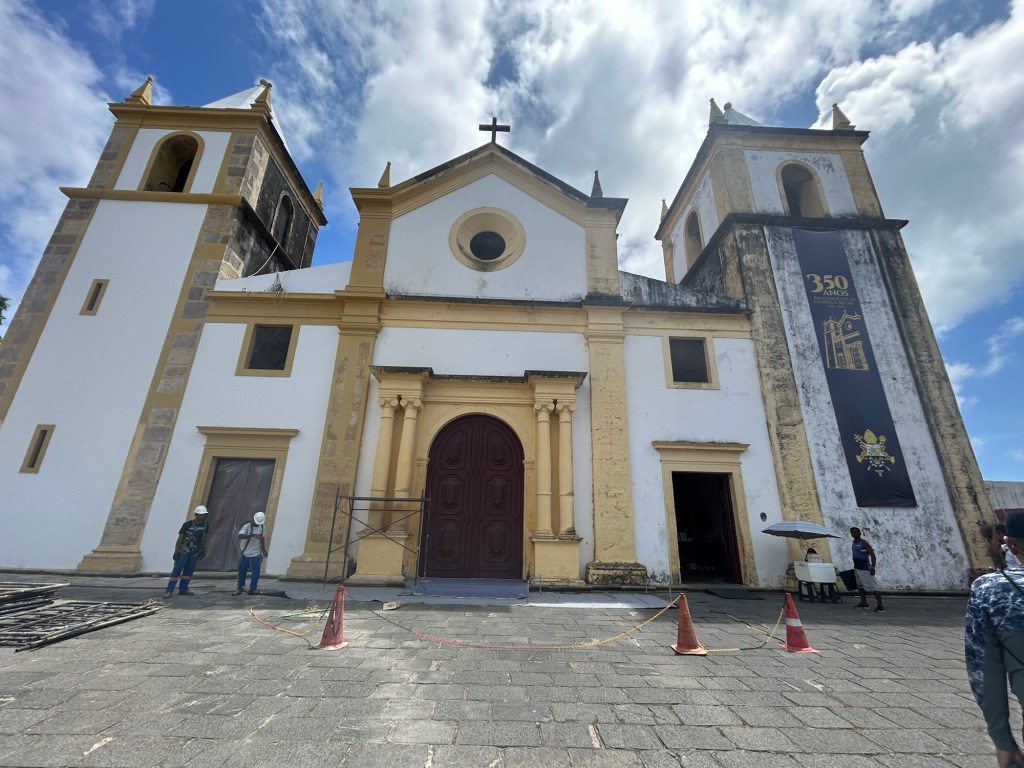
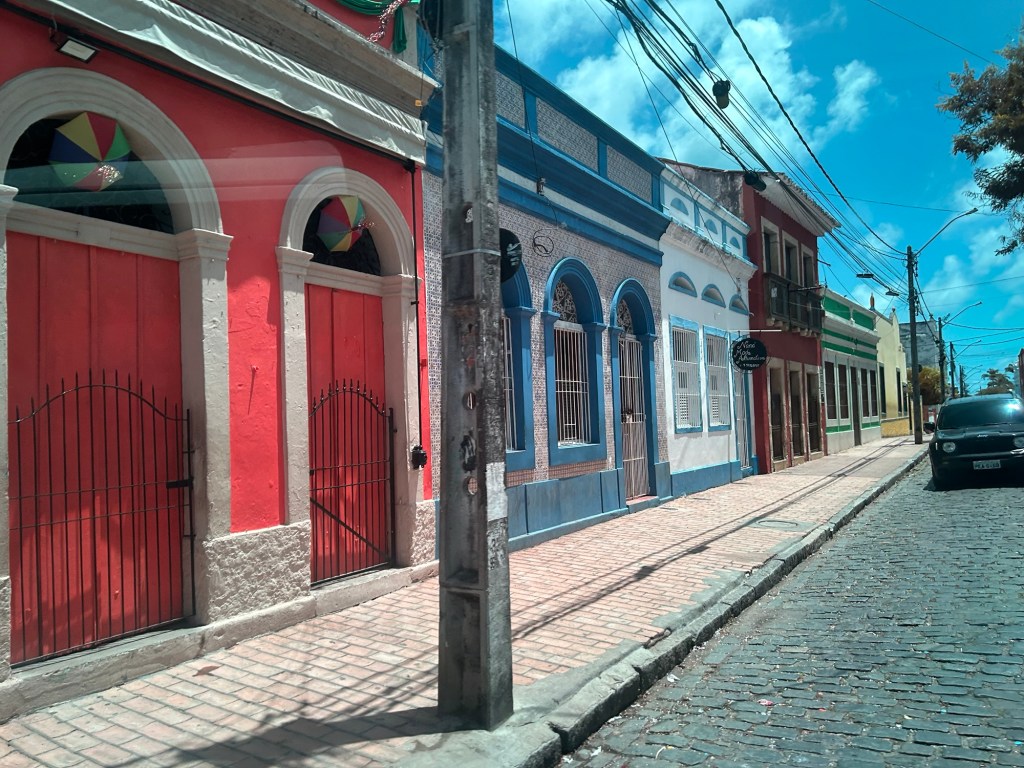
Orlinda, a UNESCO site built on seven hills, is known for its vibrant painted houses, old colonial buildings from the 1700s, and the Convent of San Francisco (Saint Francis). The convent was built in 1585 and has the largest known collection of blue and white Portuguese tiles. Repair and renovations are needed for the oil paintings, ornately carved furniture, and tiles.
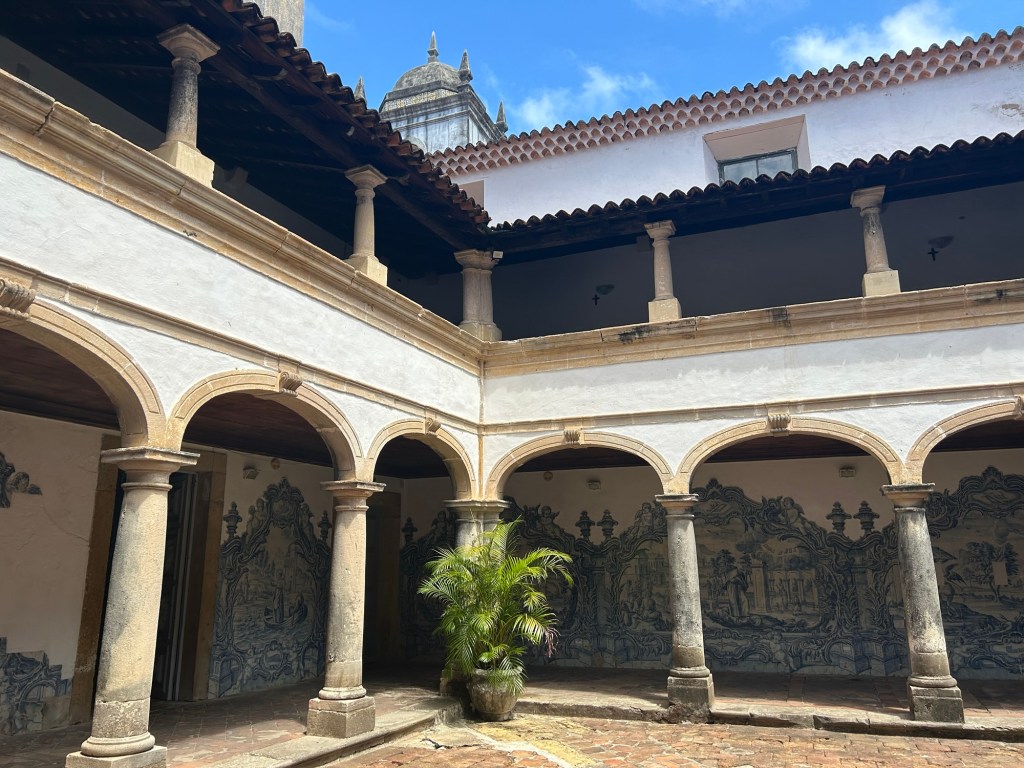
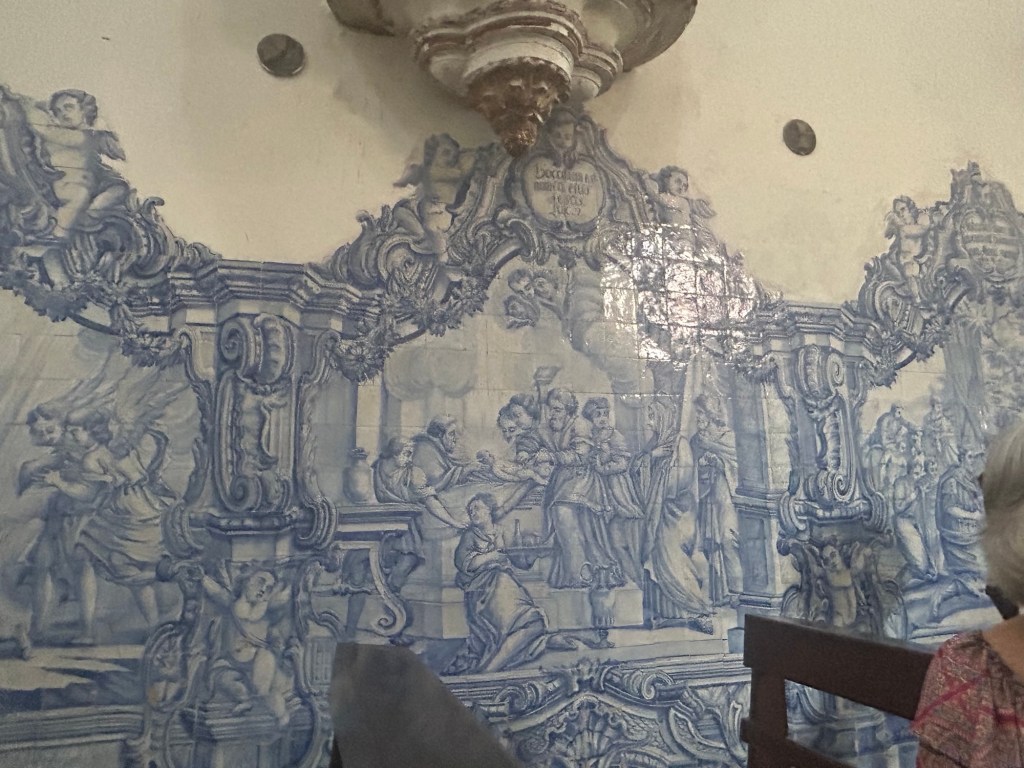
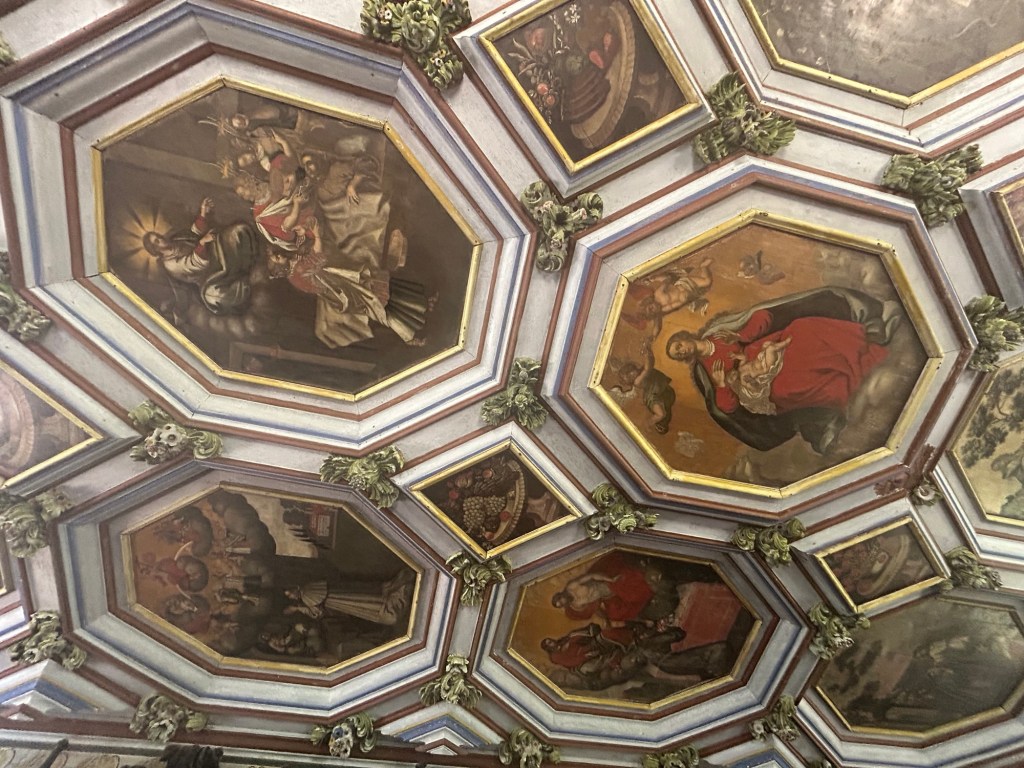
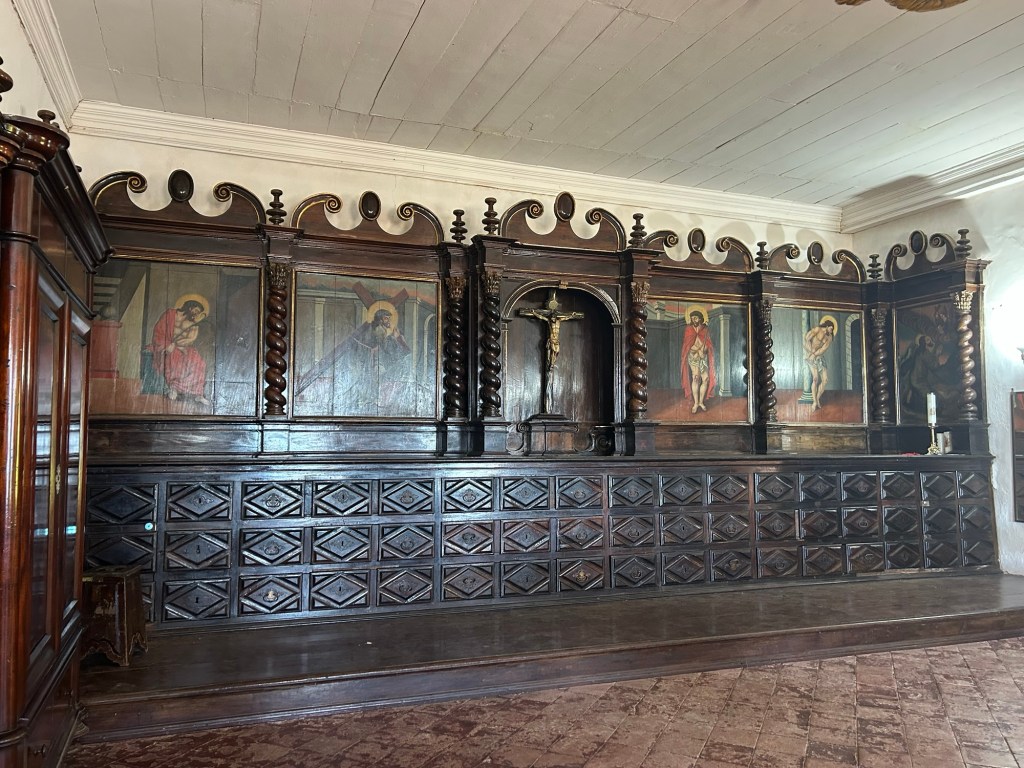
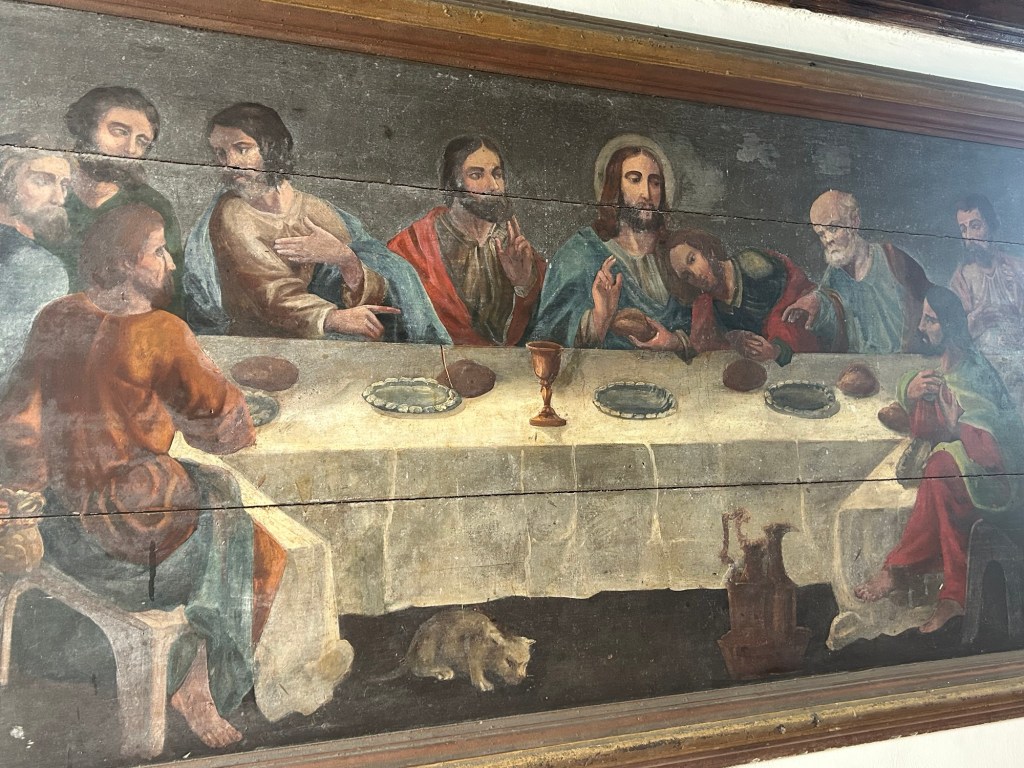
Look carefully at this “Last Supper” oil painting on wood from the 1600s. It is not signed by an artist because that was considered vain. But each artist painted something unique on his works as his “signature”. Do you see it? You’re right! A cat under the table!
Our van driver did a great job navigating the steep hills and narrow old roads as we toured the city. Over a million people visit this city of 400,000 during Carnival.
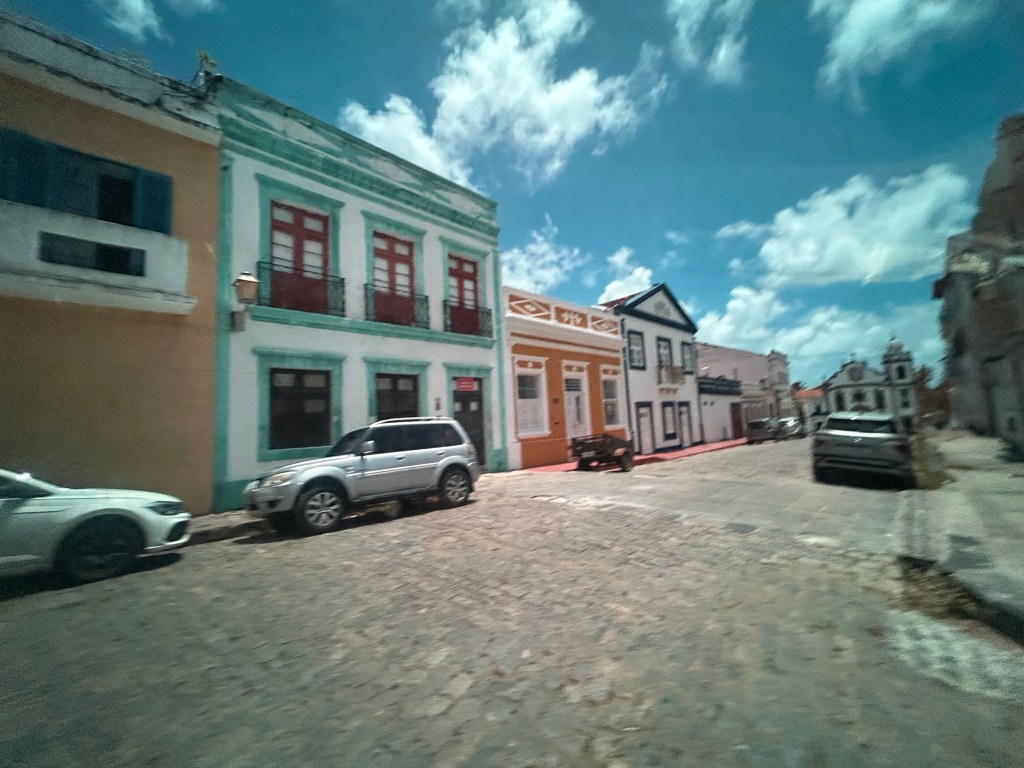
Then off to Recife, a metropolitan area of 4 million, famous for its rivers and bridges. The city is so named because of the coral reefs that form a protective barrier away from the shoreline.
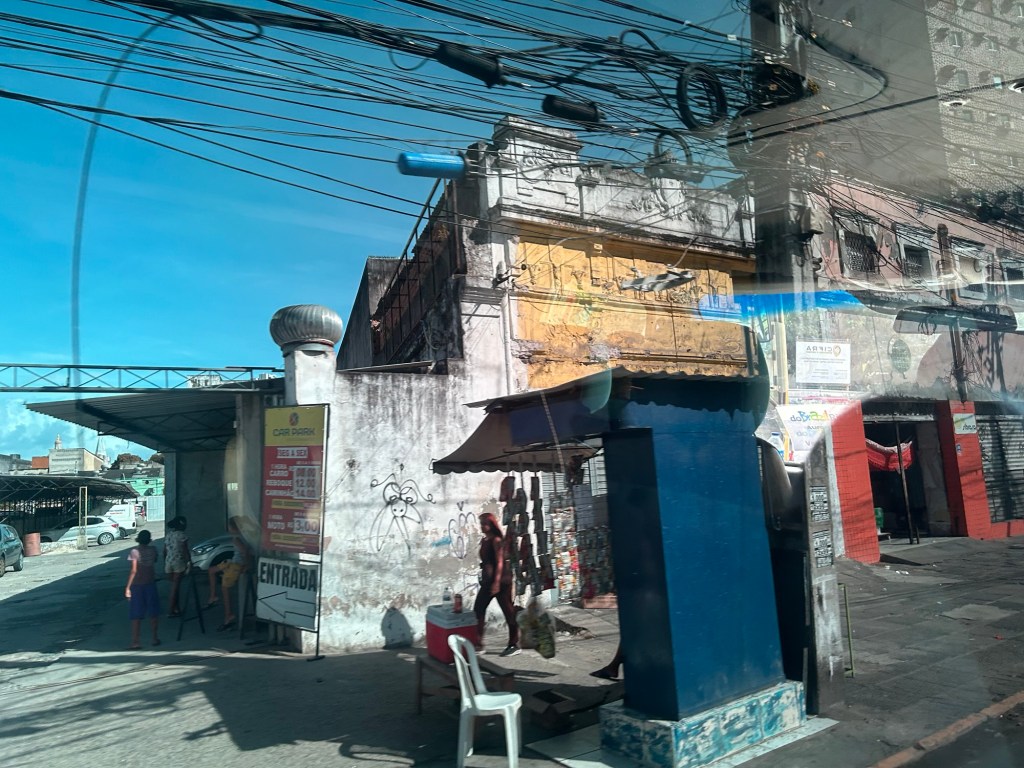
We noticed the big gap between the rich and the poor. While there are modern office buildings and luxurious homes, they are also large slum areas called favelas with makeshift housing and high poverty and crime.
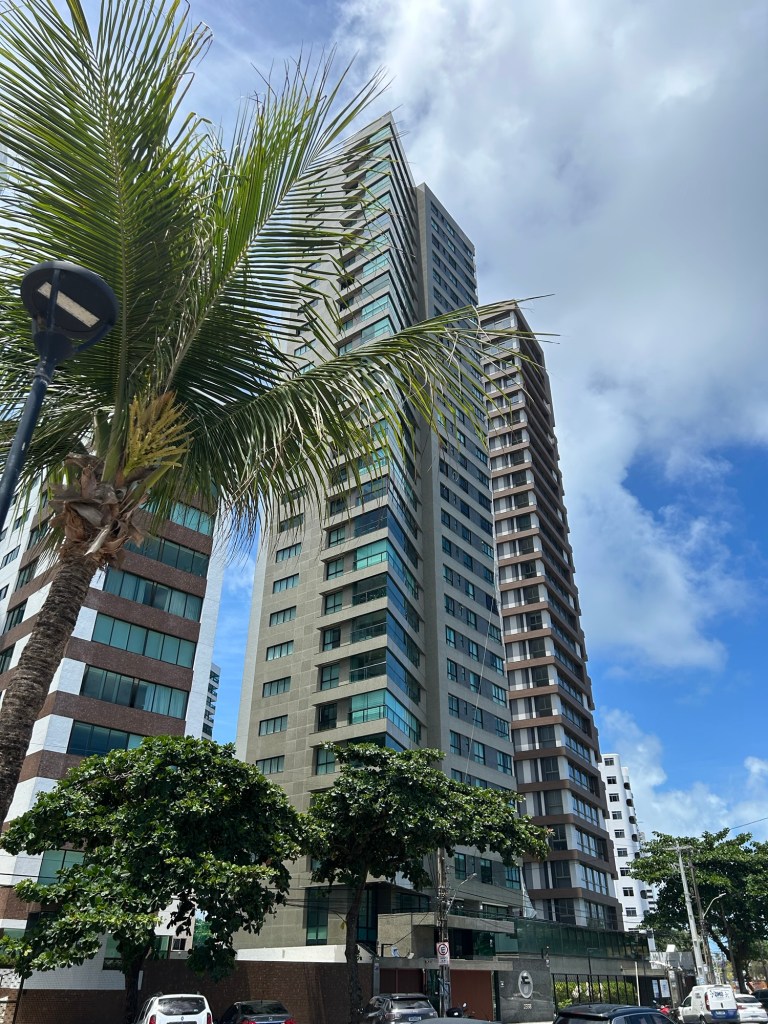
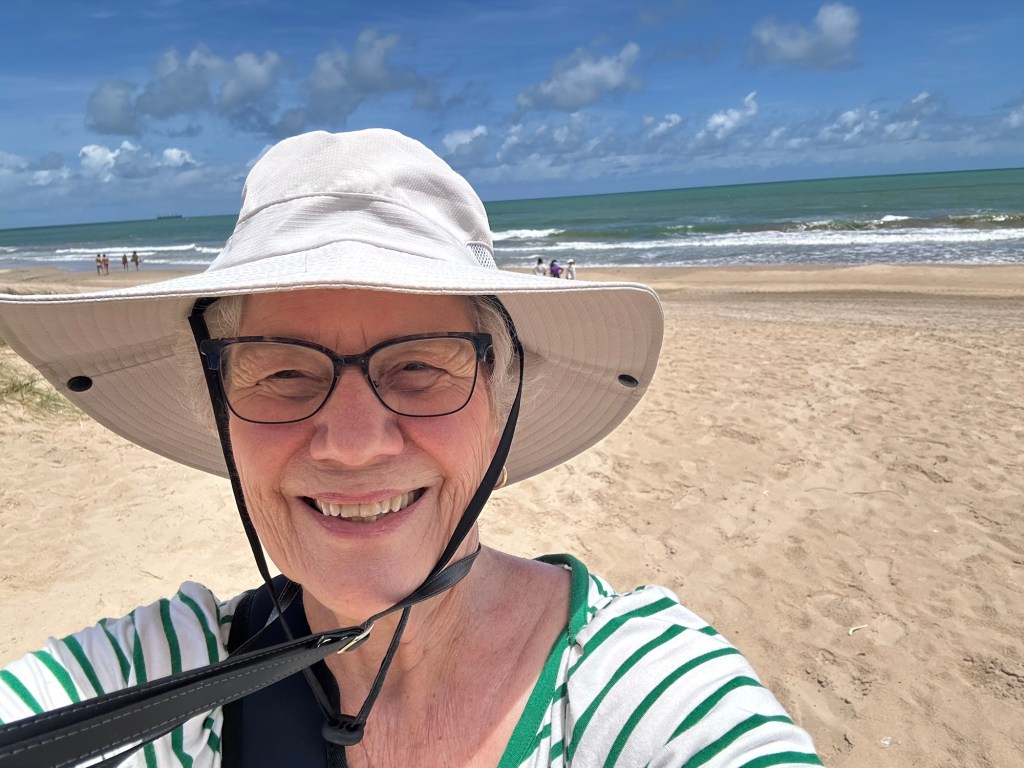
We stopped at the Boa Viagem Beach, which included a promenade for walking, to enjoy fresh chilled coconut water. Due to the high risk of sharks, swimming is prohibited here.
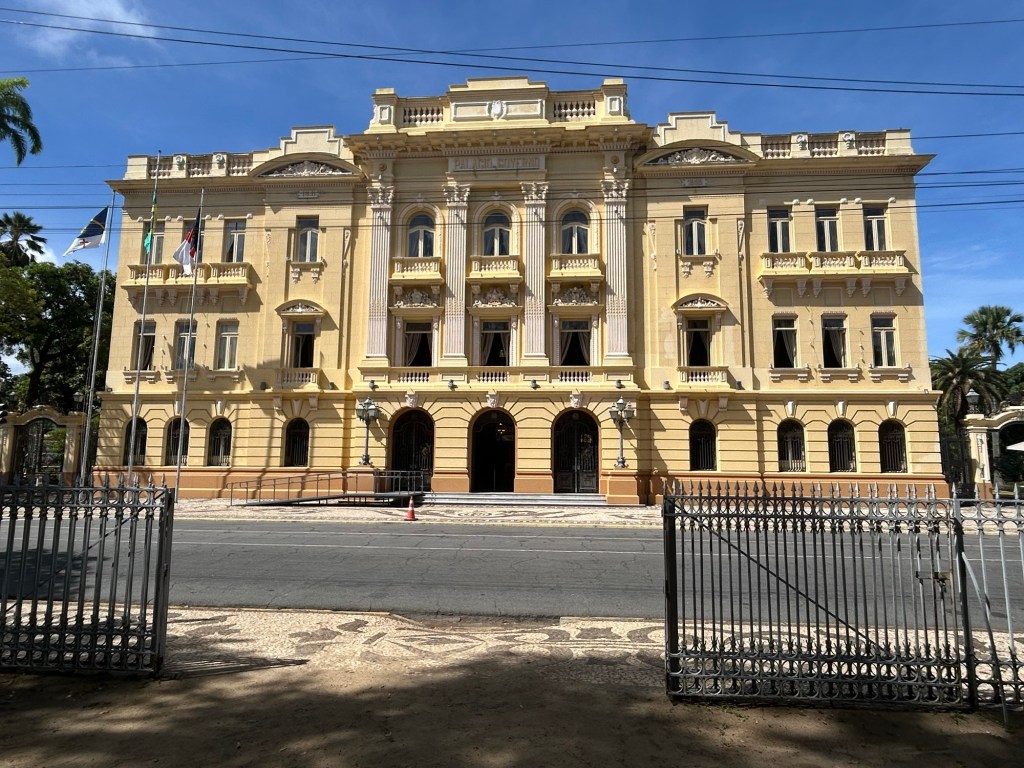
We went inside the governor’s palace where they was a heavy police presence.
The Casa da Cultura is an old prison built in 1855, which was used to house hundreds of prisoners in its 150 cells until 1957. Some years ago, it was made into a shopping center with each cell a separate little shop with local crafts.
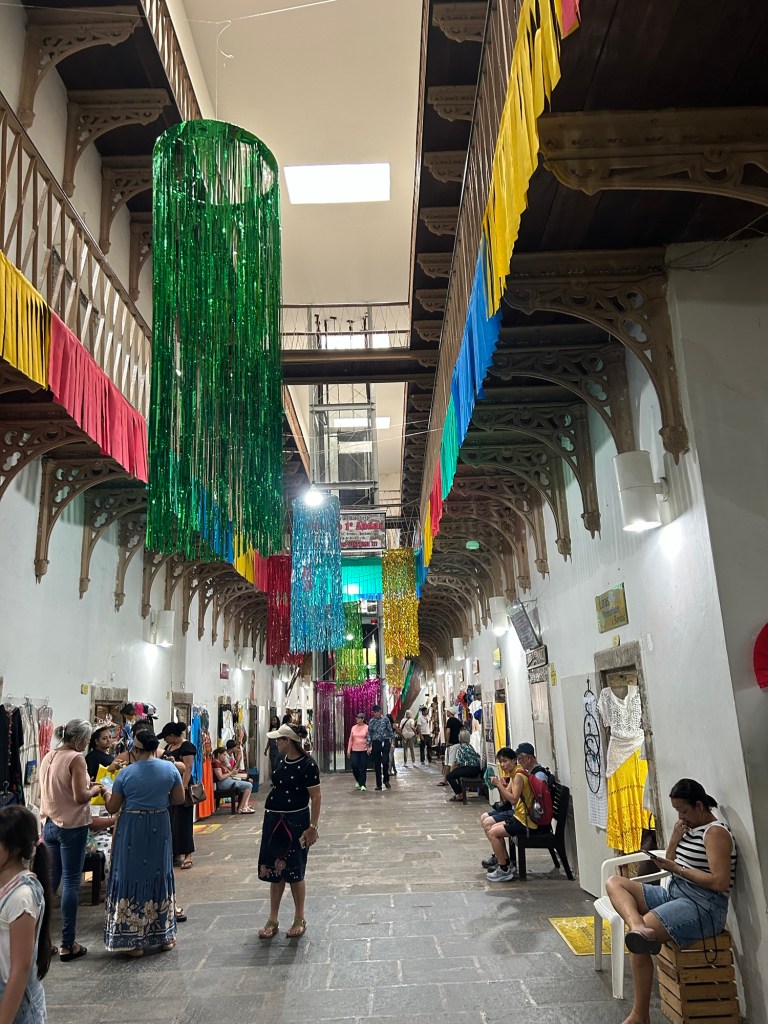
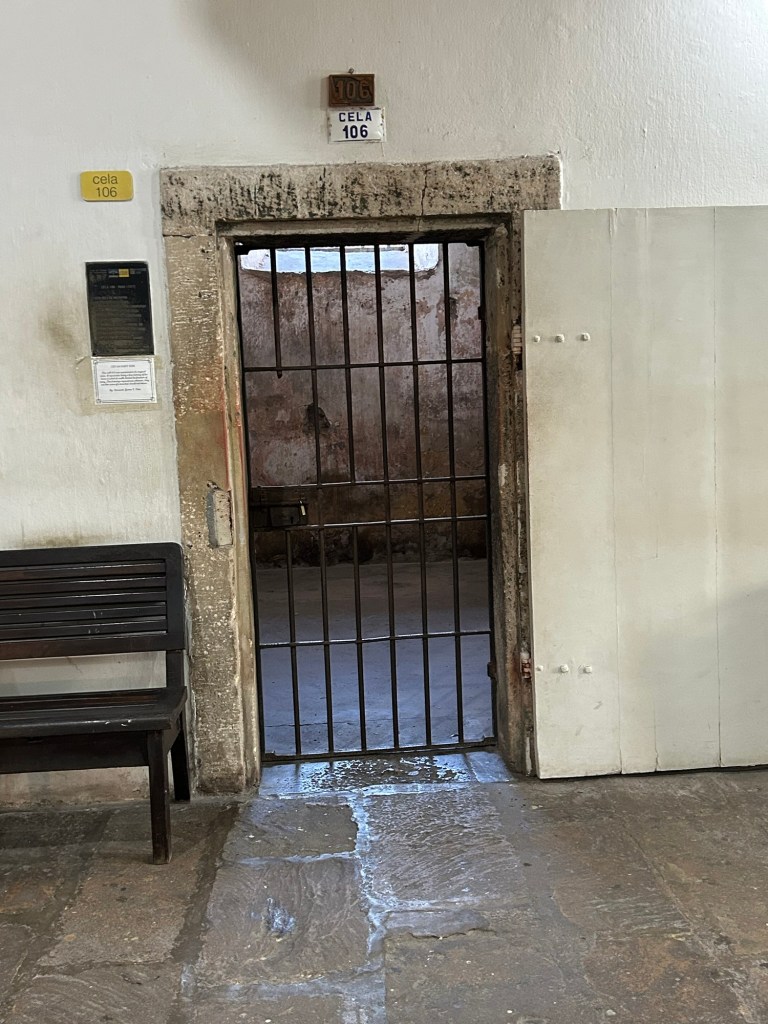
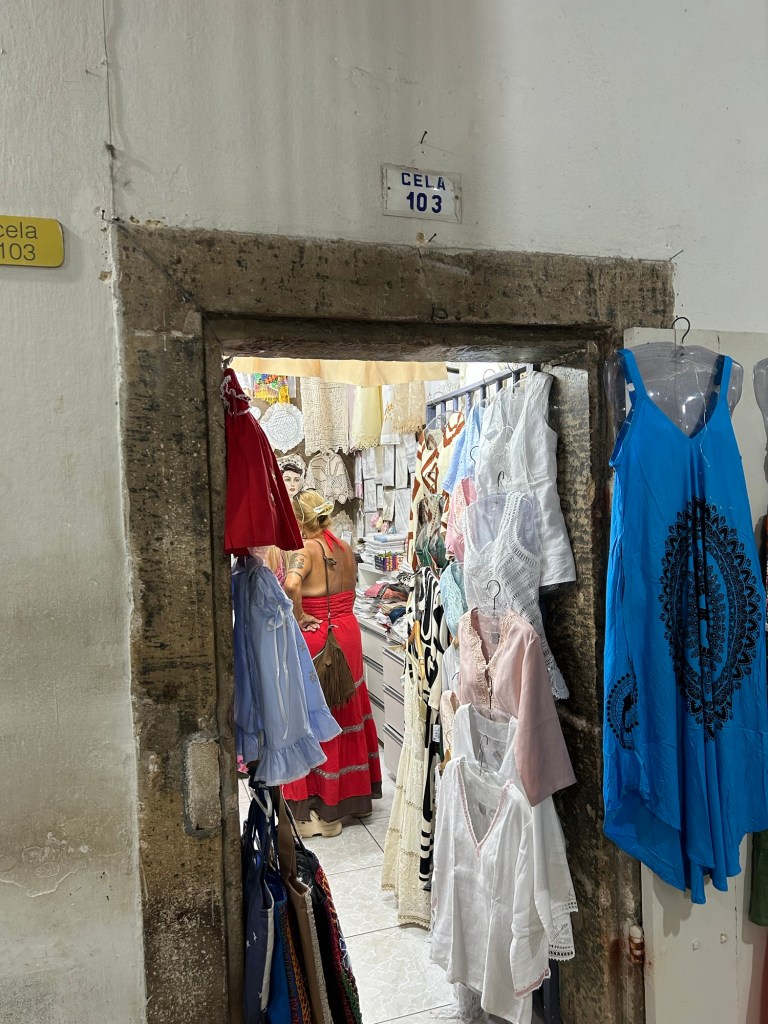
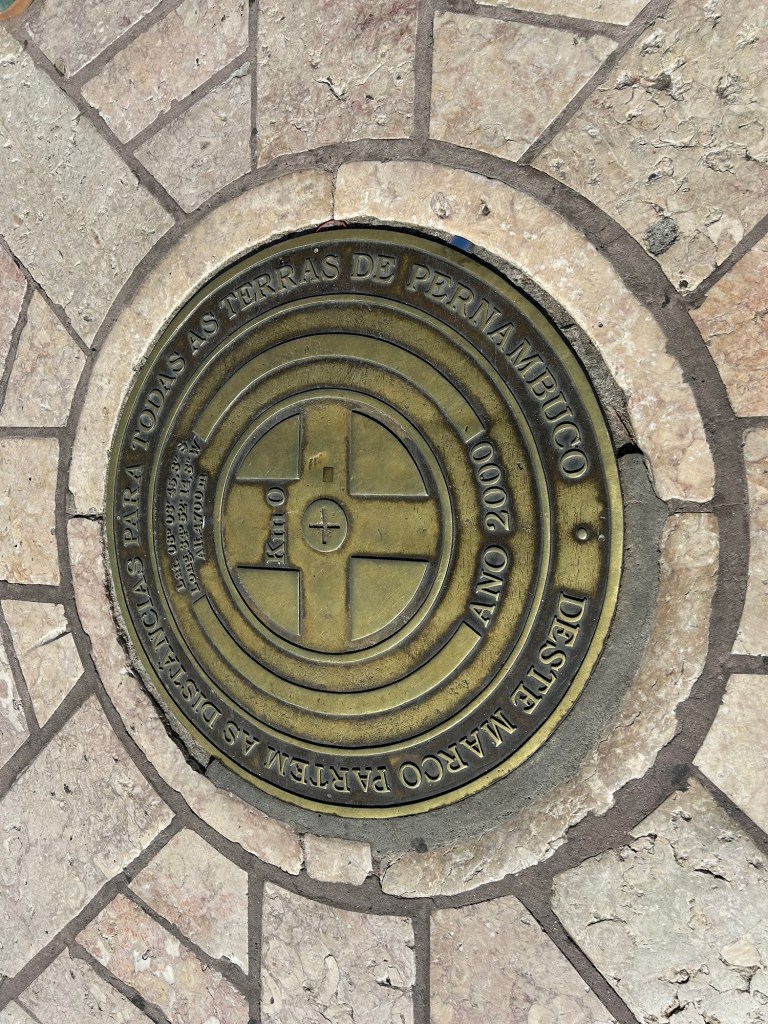
The Recife waterfront is being revitalized and rebuilt. Marco Zero (Ground Zero) is a monument in the ground marking the spot where the city was founded 500 years ago. From its center, all distances in the state of Pernambuco are measured.
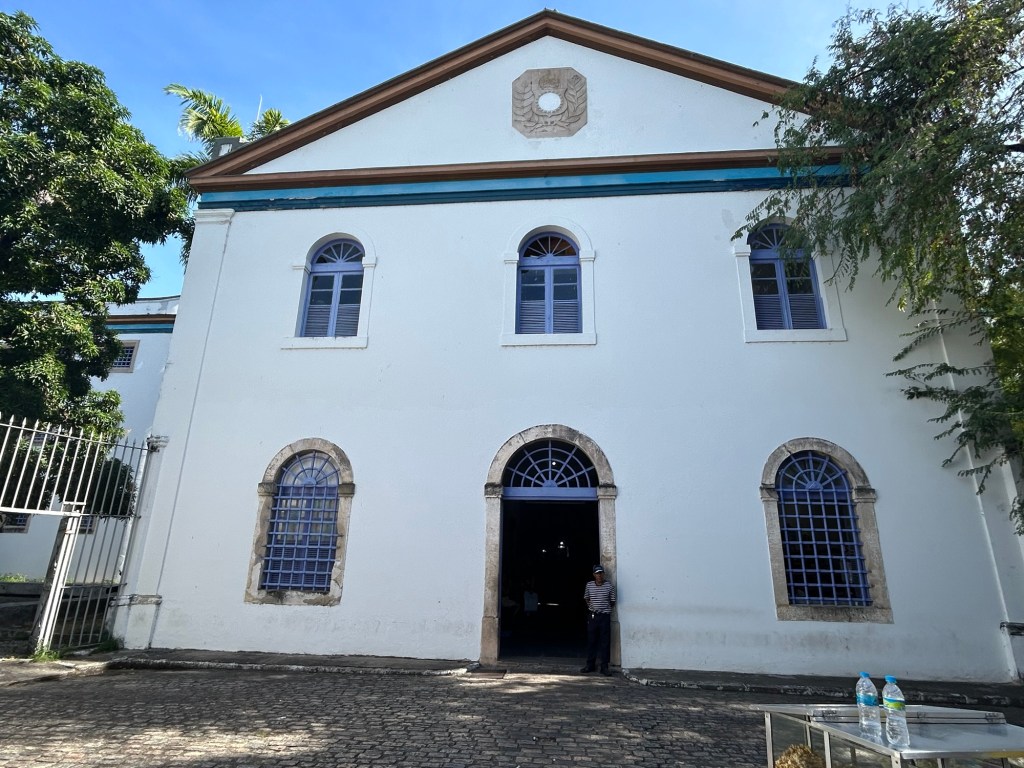
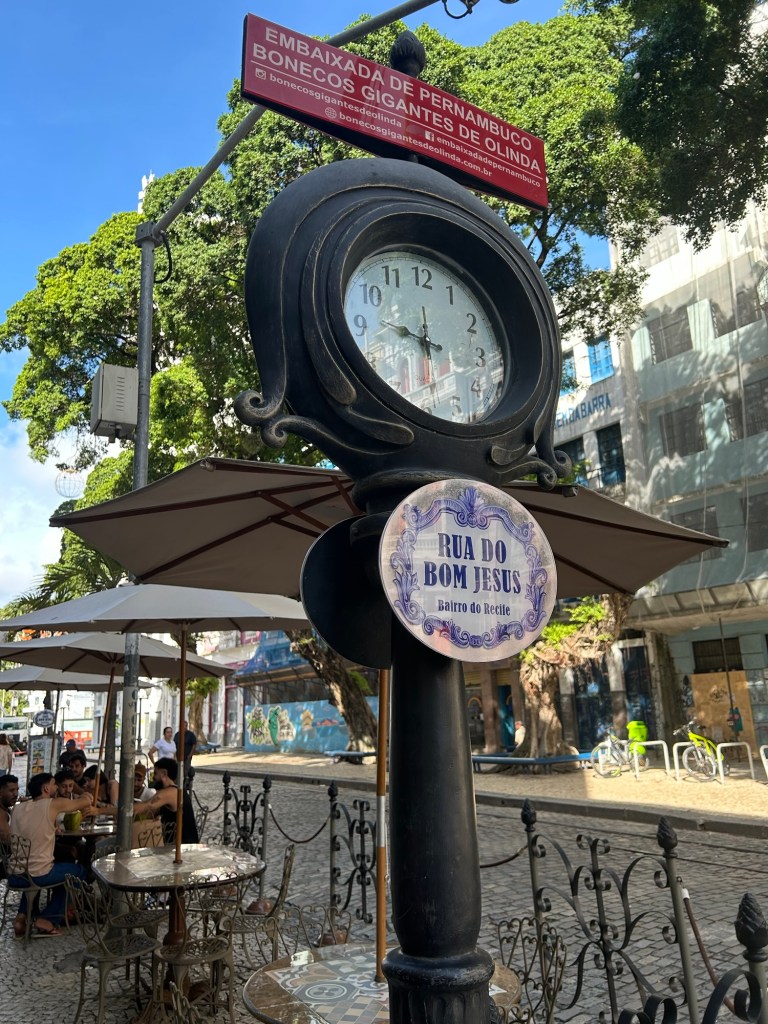
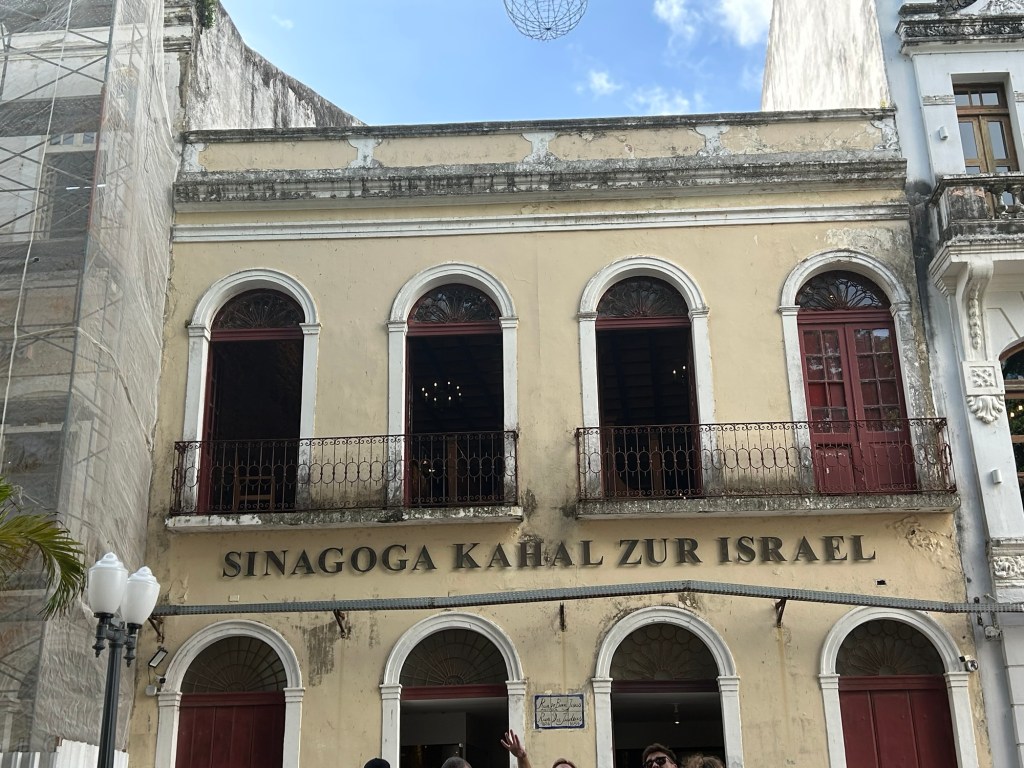
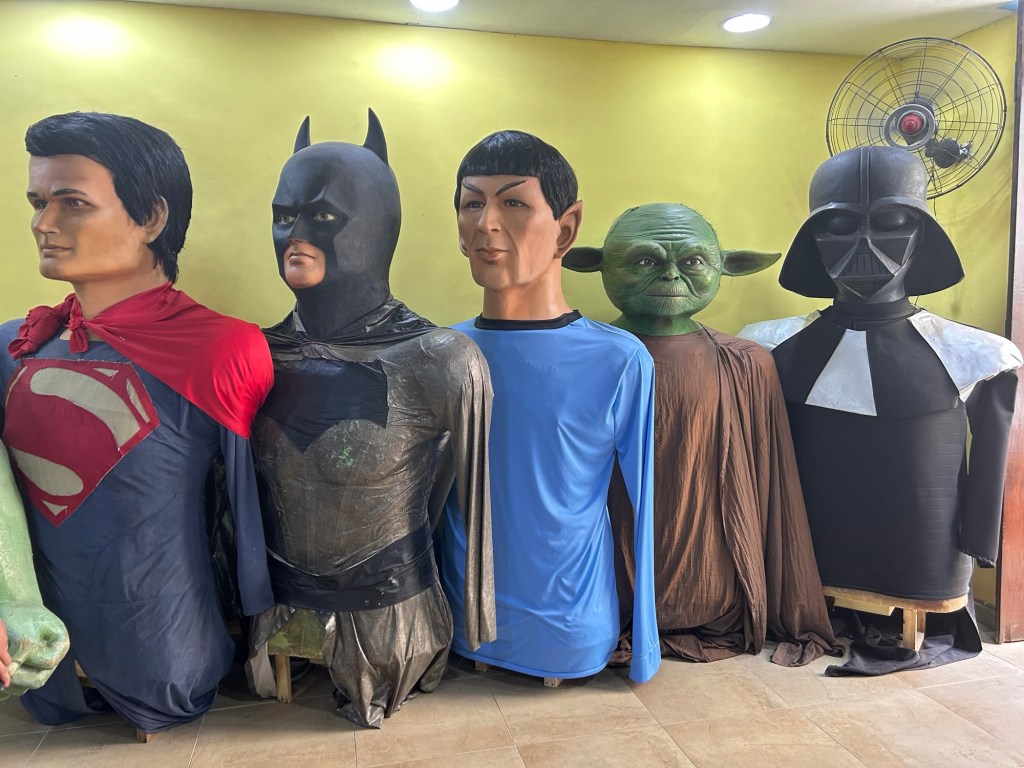
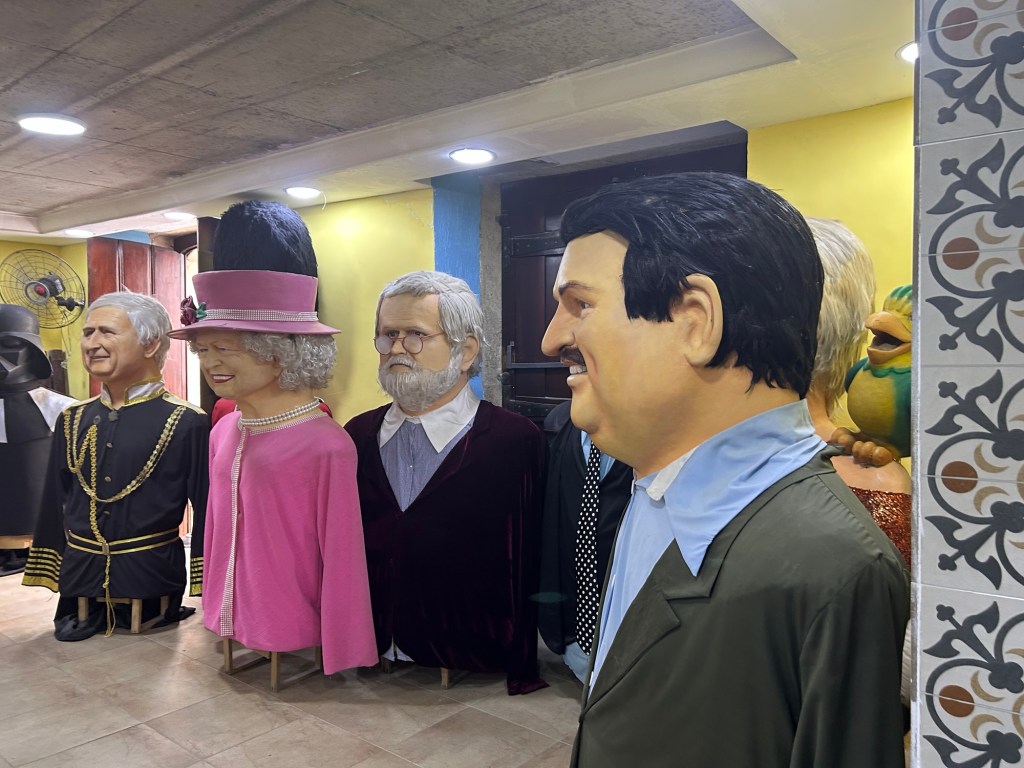
Our last stop was a street, Rua do bom Jesus, with the oldest Jewish synagogue (1636) in South America and a warehouse with 100 paper-mache figures carried by people in the Carnival parades.
What a myriad of sights, sounds, and experiences today! I’m sure I’ll be processing my thoughts and reactions during the next few days.
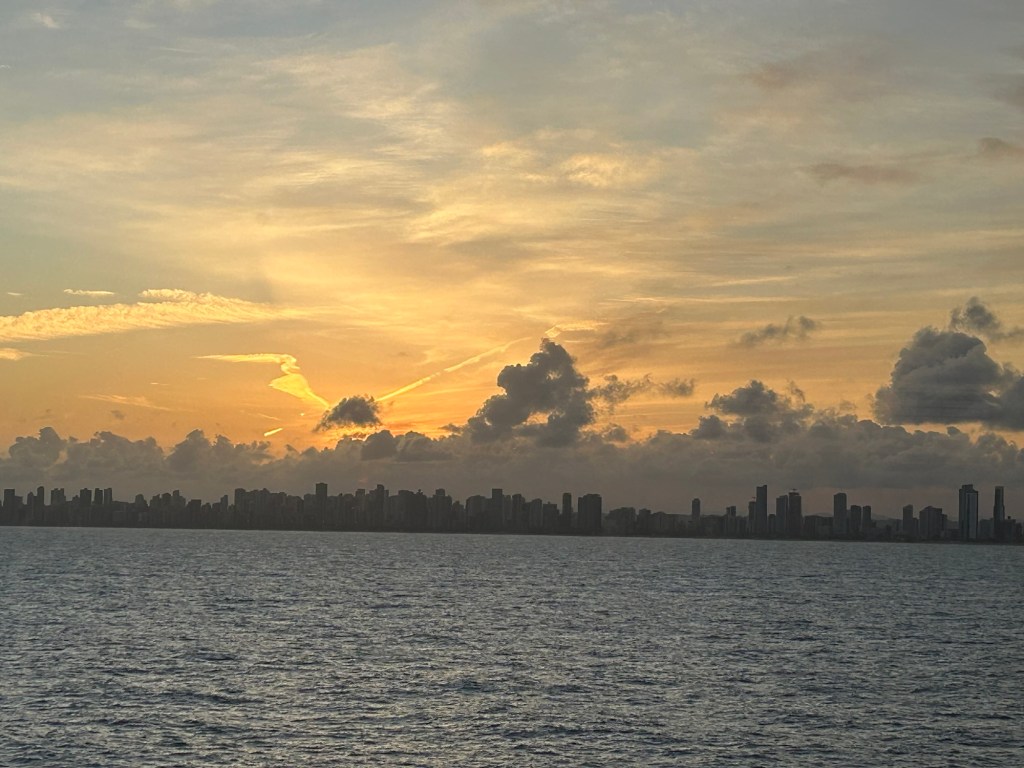
I loved this calming sight as we pulled out of the harbor late afternoon, the city skyline against the backdrop of the setting sun.
 Travels with Irene
Leave a comment