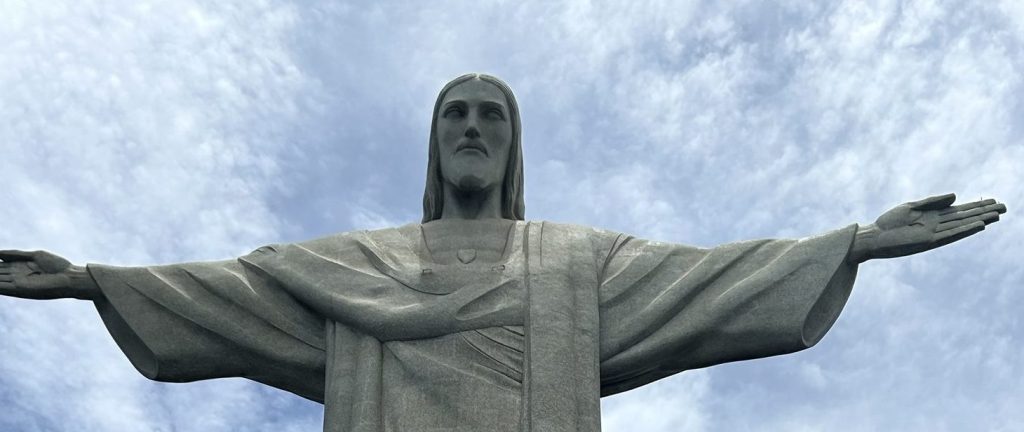
I was unprepared for my reaction as I arrived at the top of Corcovado Mountain and saw the simplistic statue of Christ the Redeemer with His arms stretching over the city of Rio. Hundreds of people were standing at the base of the towering concrete and sandstone monument, and all were looking up, some noisily jostling for a better view, others extending their cameras high up to get the perfect photo, and a few reverently praying. I looked around at the multi generations and heard various languages being spoken by brightly dressed visitors. And during the overload of sights and sounds, I looked up at those open arms of Jesus and wondered how many of the people crowded around below really knew the love, joy, and hope that Christ, our Redeemer offers to all. It was a sobering thought that stayed with me throughout the day.
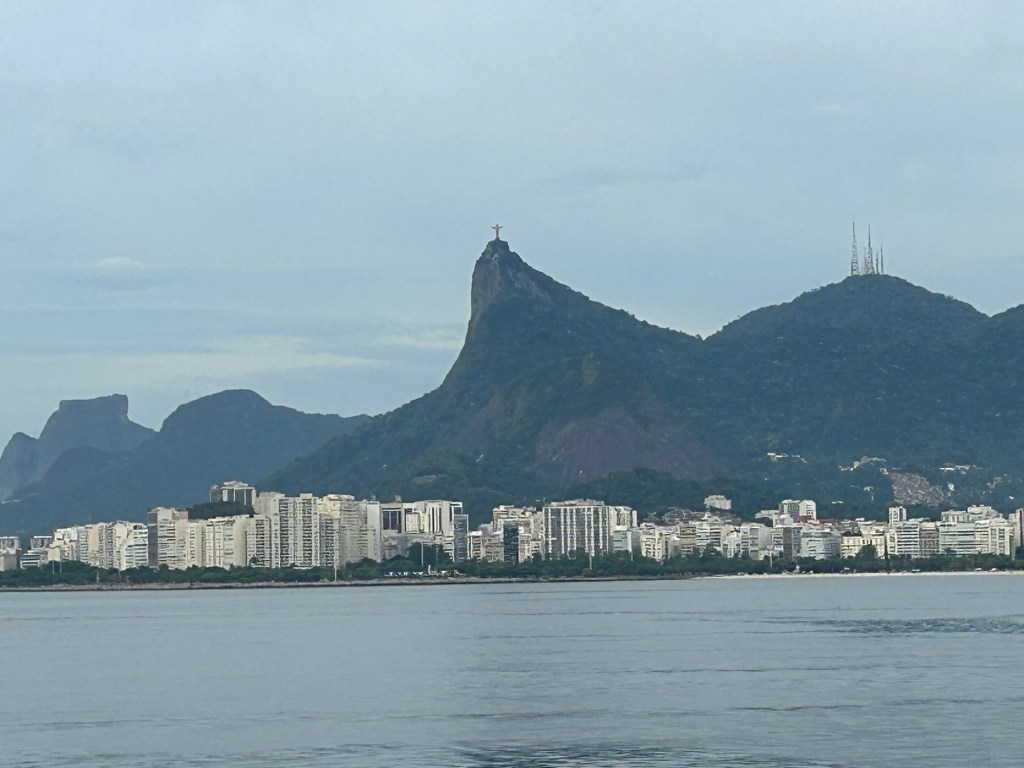
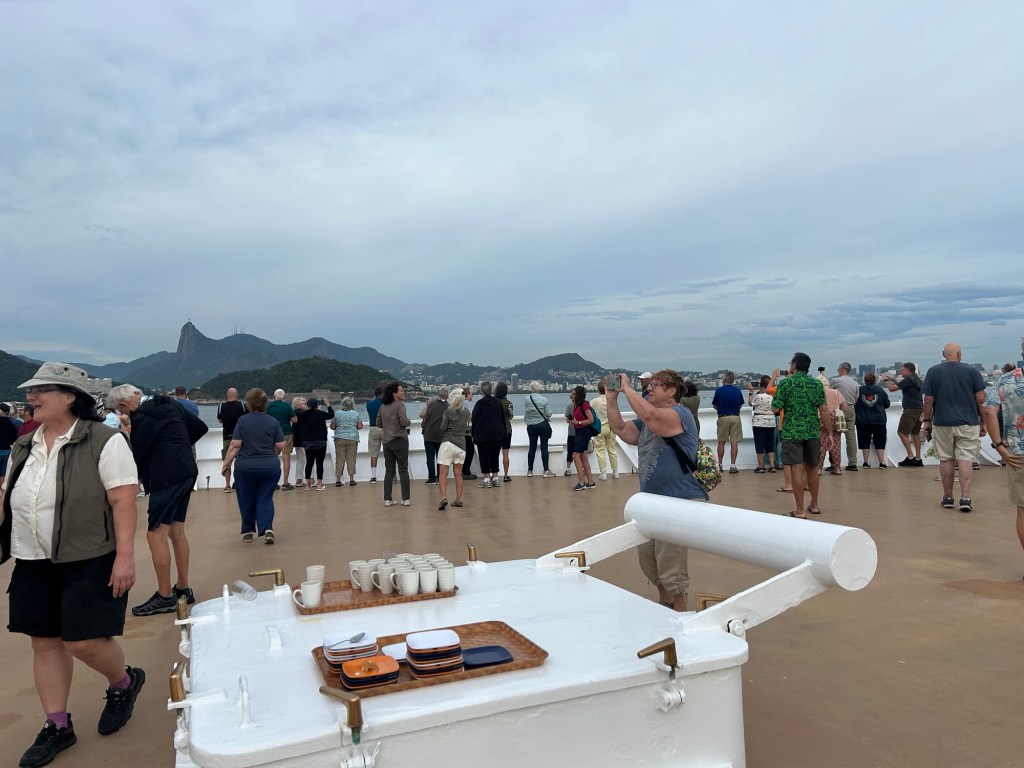
Our day had started many hours earlier. The Captain of the Volendam opened up the bow of the ship on the 5th deck so we early-risers could watch our arrival into the port of Rio de Janeiro on Sunday Jan 18. Dozens of passengers stood out on the warm, breezy deck with their cameras and binoculars, absorbing the changing views of Sugarloaf Mountain, the approach to the harbor, and in the distance, the iconic Christ the Redeemer statue atop Corcovado Mountain. Crew members manned a large serving table with insulated coffee carafes, pitchers of orange juice, and trays of flaky “Rio Rolls”.
Months ago we had planned a private tour of the city with Viator and had invited others from our ship to join us via our cruise’s Facebook page. Eight of us met our guide outside of the cruise terminal to begin our seven-hour narrated tour in an air-conditioned van.
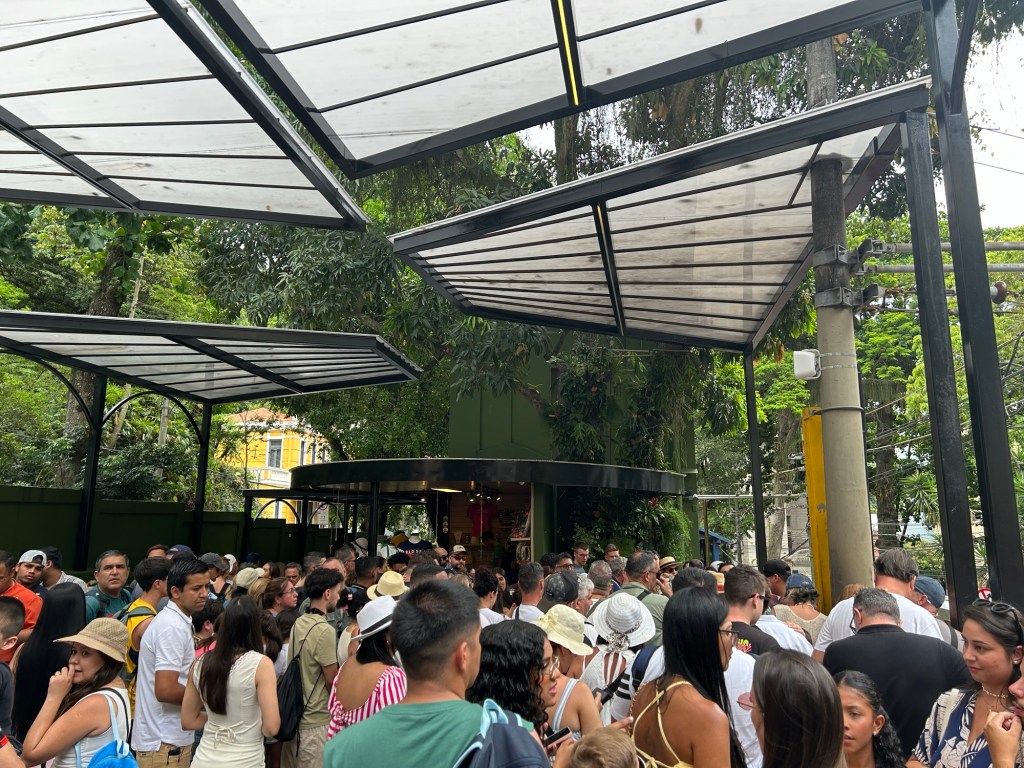
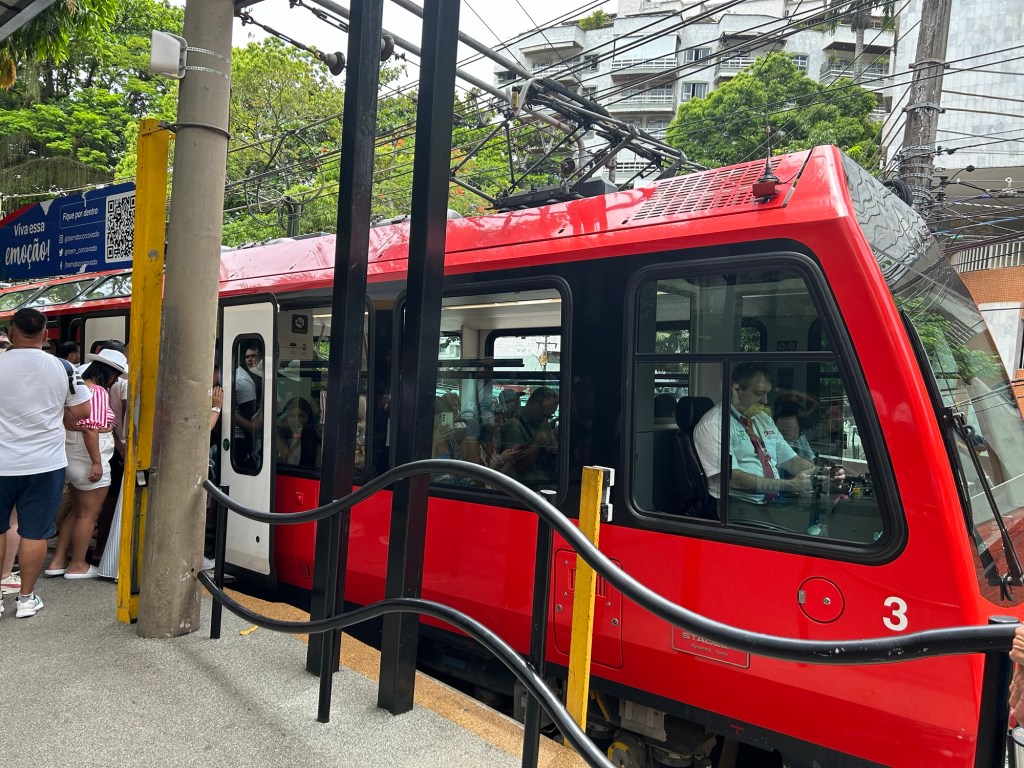
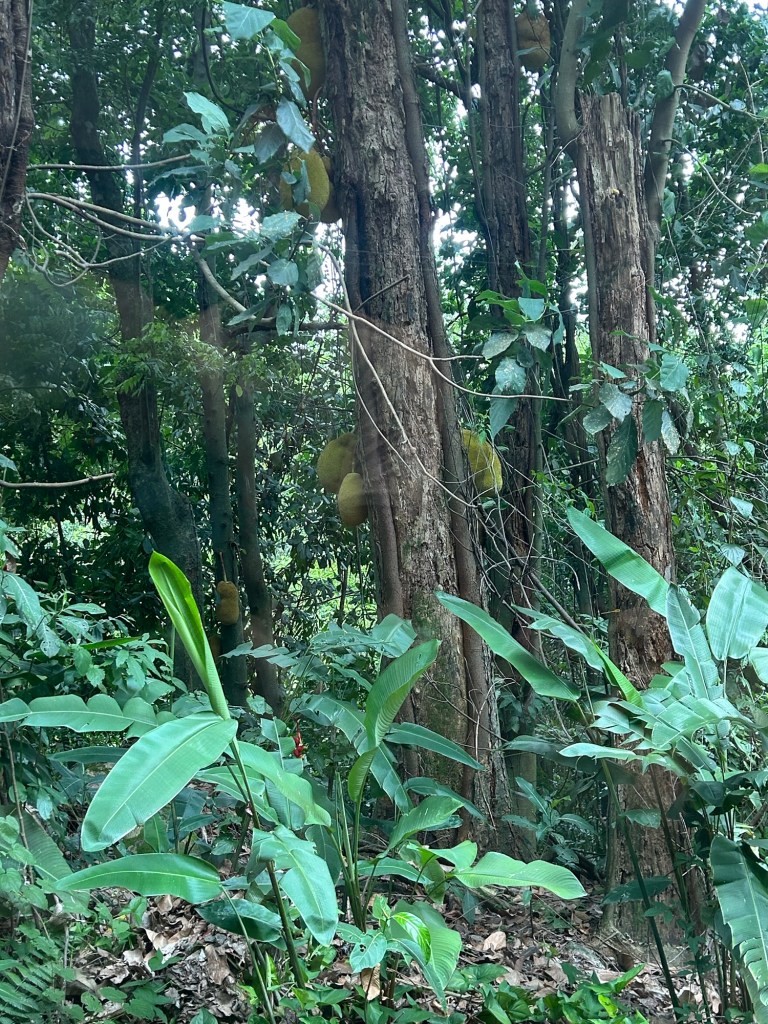
Even though we arrived at the train station to take us to Christ the Redeemer mid-morning, the lines were already long to board the train. Fortunately, we had prebooked “skip-the-line” tickets which shortened our standing time. The scenic train ride took us upward through the Tijuca National Forest to the summit of the mountain.
When we exited the train, we had to walk up either stairs or take escalators from the back side of the statue to arrive at the front viewing spot.
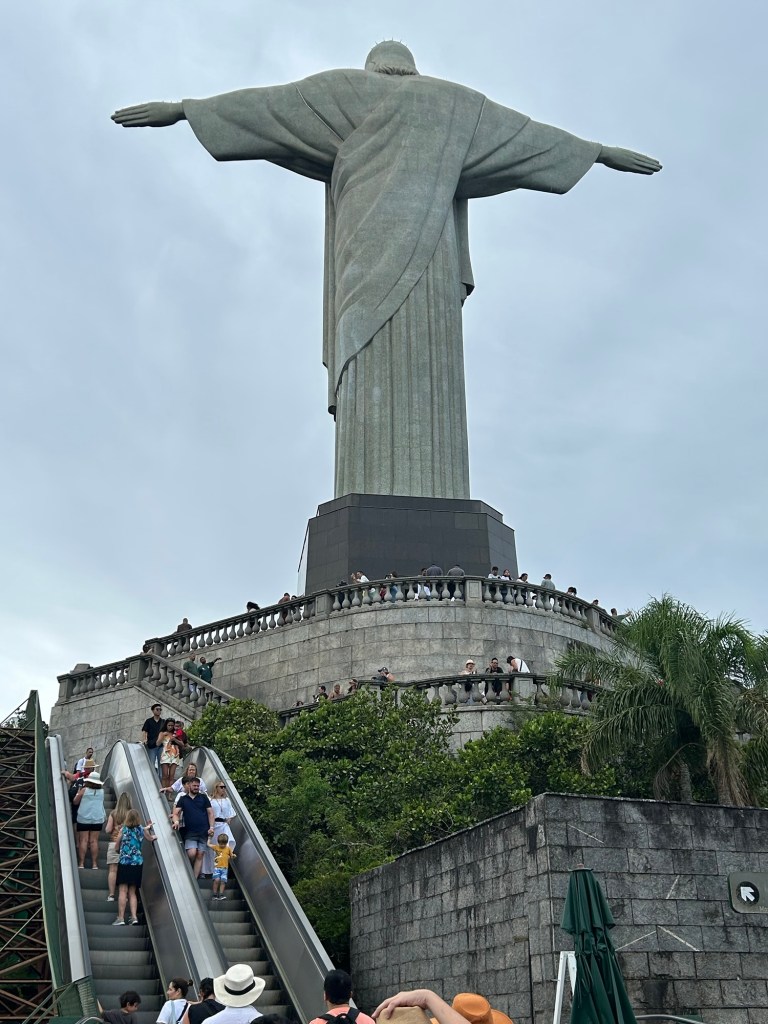
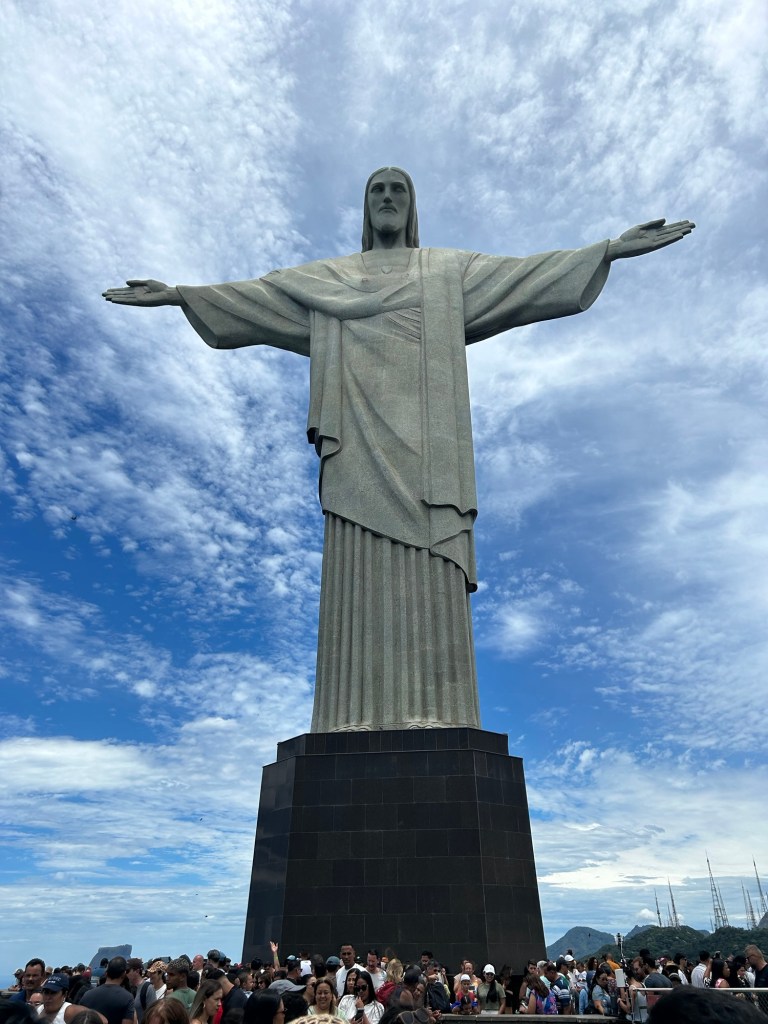
From the extended viewing platform, we could look over the city and harbor below.
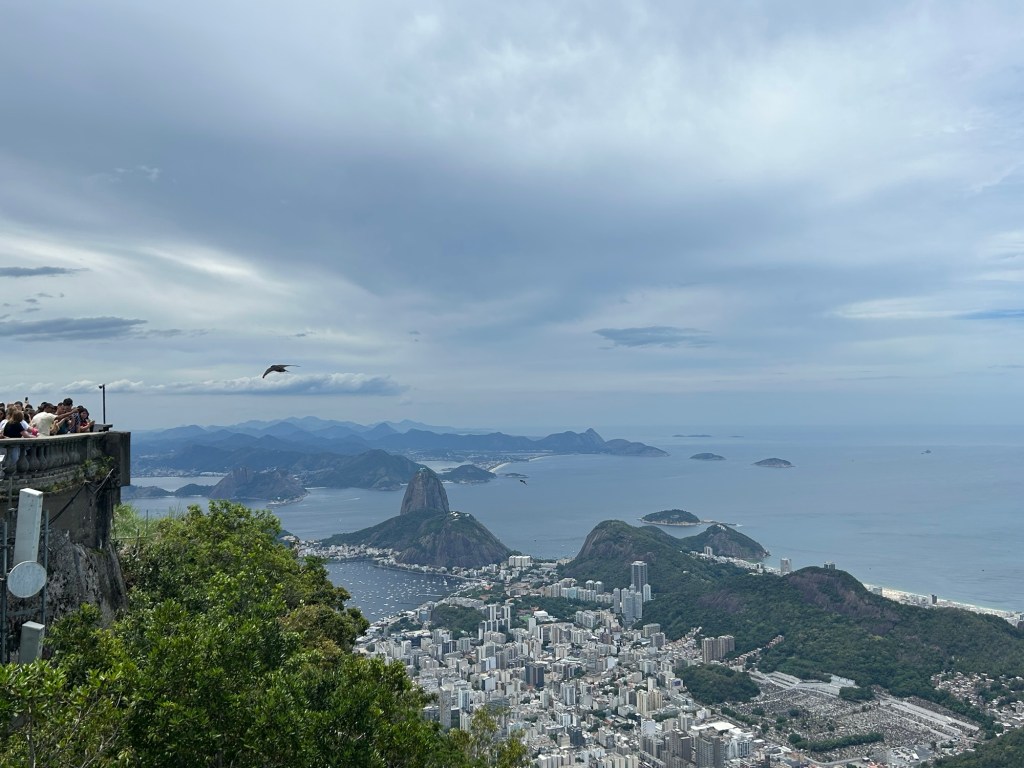
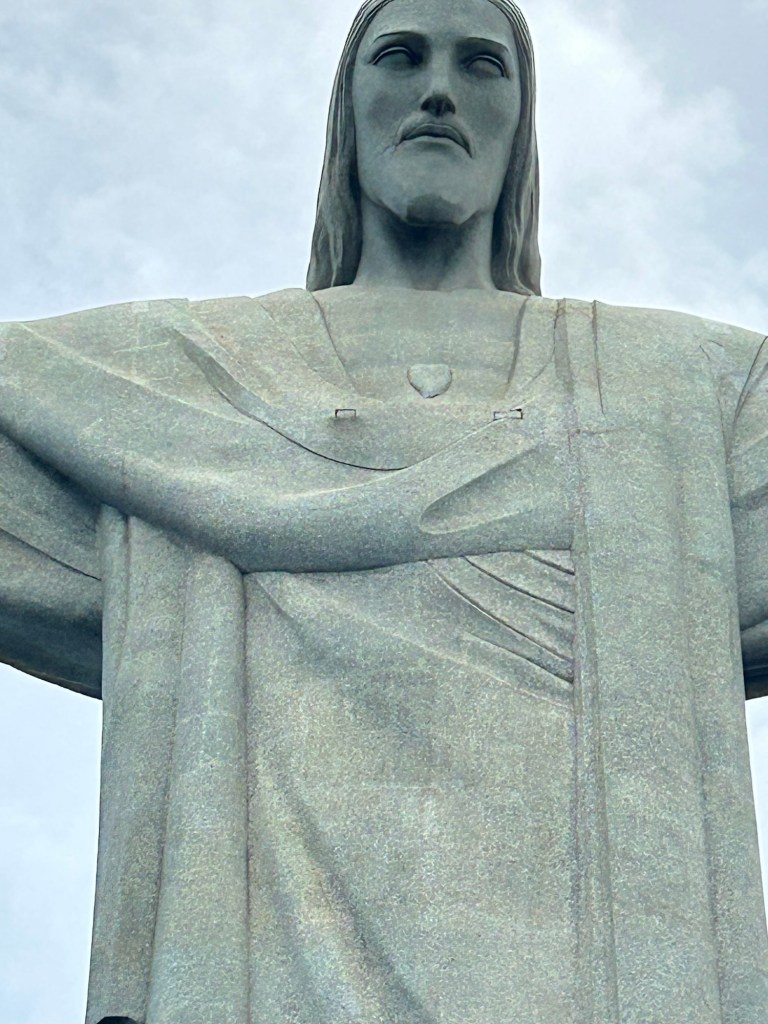
Did you ever wonder why the statue was placed there high above the city? During the time that Brazil was ruled by Portugal, Princess Isabel abolished slavery in 1888 by signing The Golden Law. In gratitude, the people wanted to build a statue in her honor because she was the “Redemptress”. However, she requested a statue of Jesus Christ because He was the true Redeemer. The project was put on hold for many years and was finally constructed from 1926-1931 with donations from the Brazilian people to honor their faith and to celebrate the independence of the country. The final design included a simple heart molded in the chest of the statue of Christ.
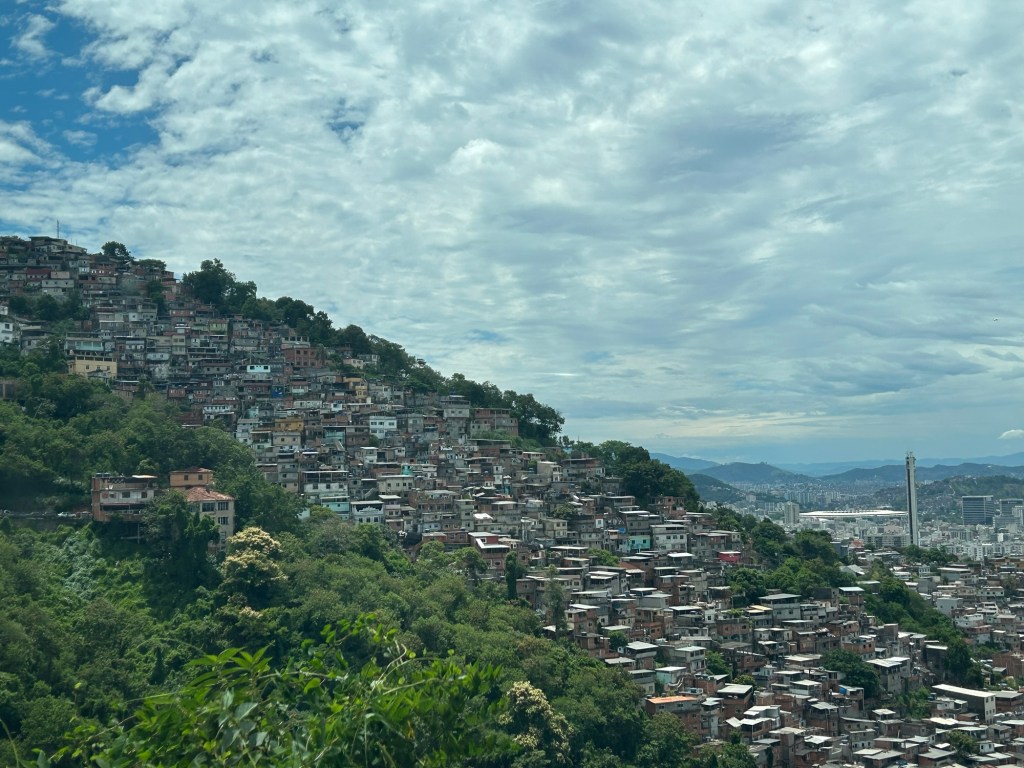
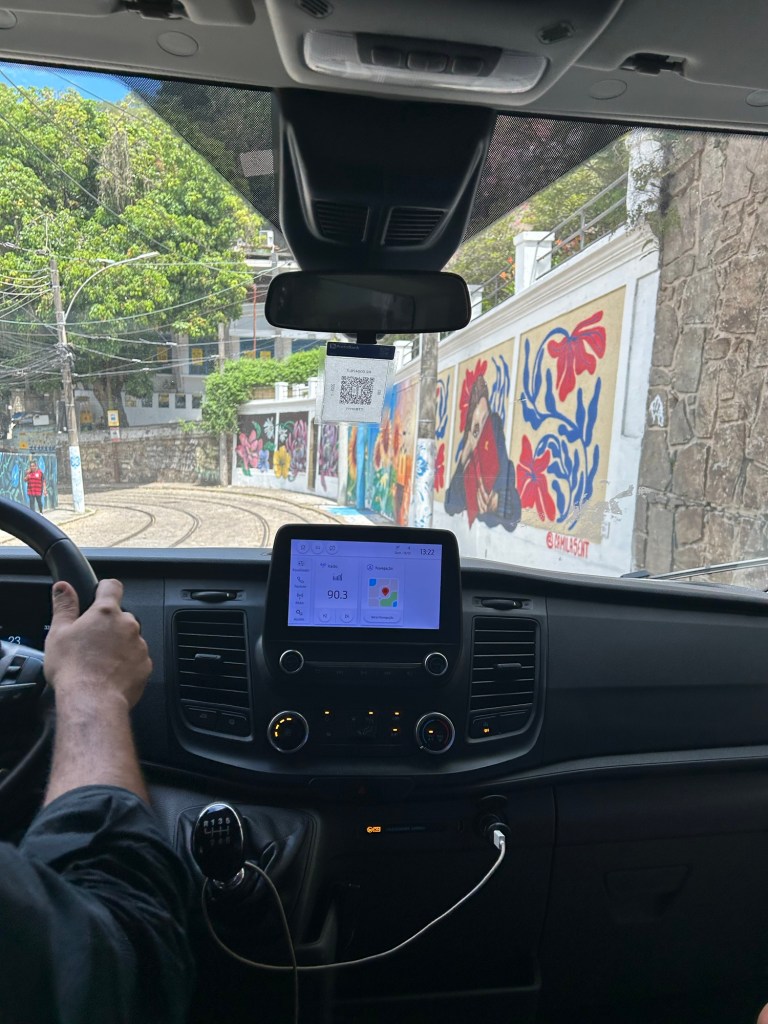
After the train ride down the mountain, we resumed our tour of this city of seven million people, two million of whom live in favelas, or slums. We saw hillsides with these impoverished settlements, which stem from post-slavery neglect, now often run by organized crime. We also saw modern city areas and colorful neighborhoods, as one would expect in any large city.
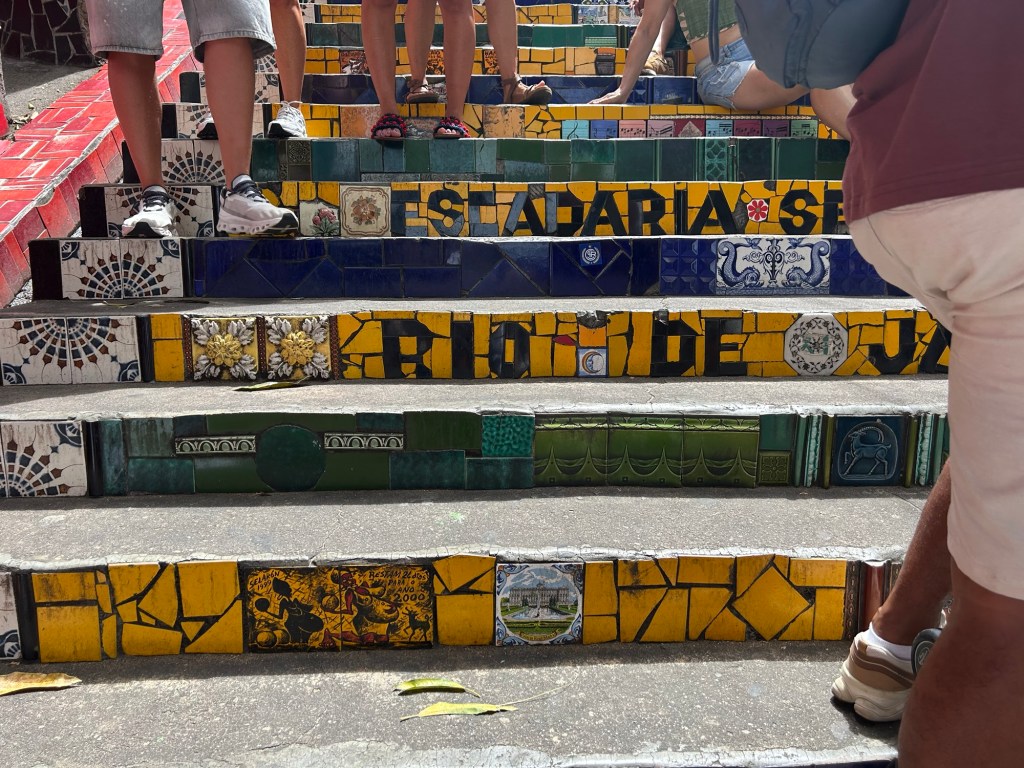
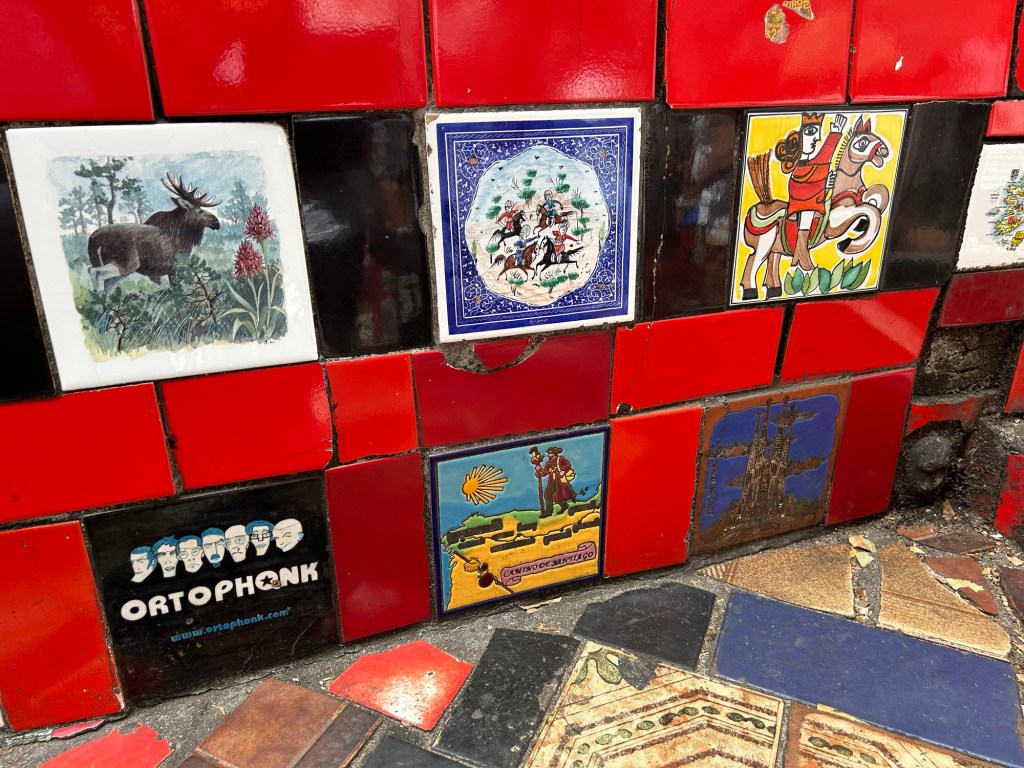
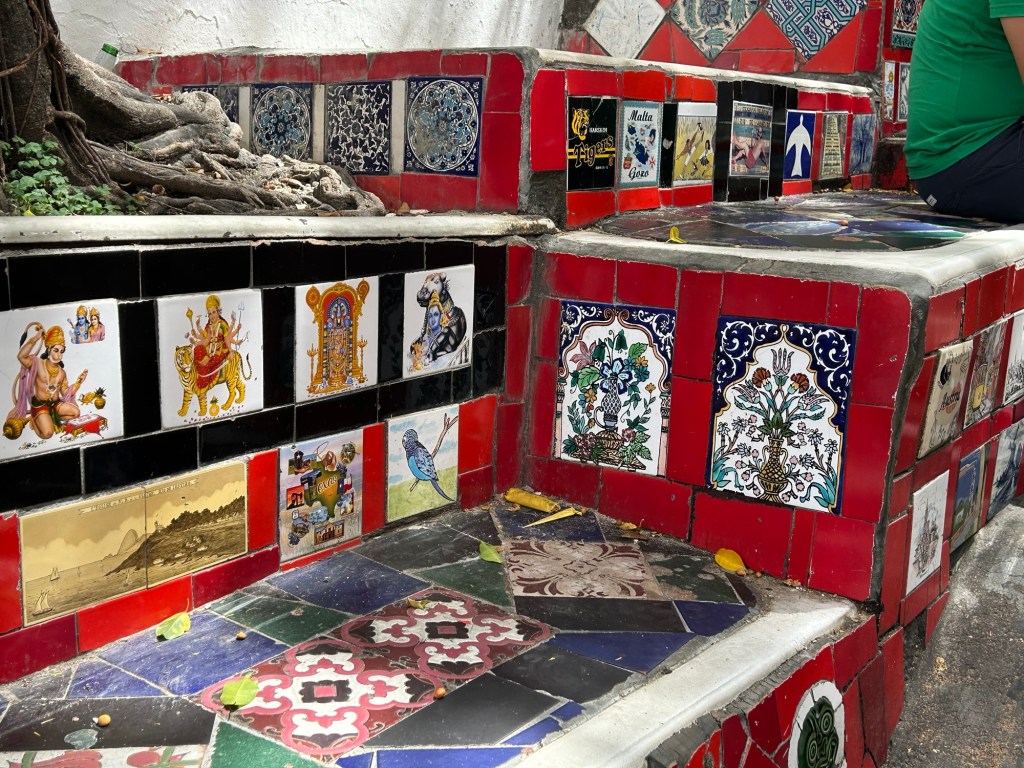
I was excited to arrive at the Selaron steps, 250 colorful, mosaic steps connecting two neighborhoods. An artist from Chile covered the steps with over 2,000 tiles from more than 60 countries of the world, beginning the project in 1990 and continuing for many years. He mainly used blue, yellow, and green colored tiles representing the flag of Brazil, and red for Chile, his home country. So many people were walking up and down them, and climbing the walls on the side that it was a challenge getting good photos.
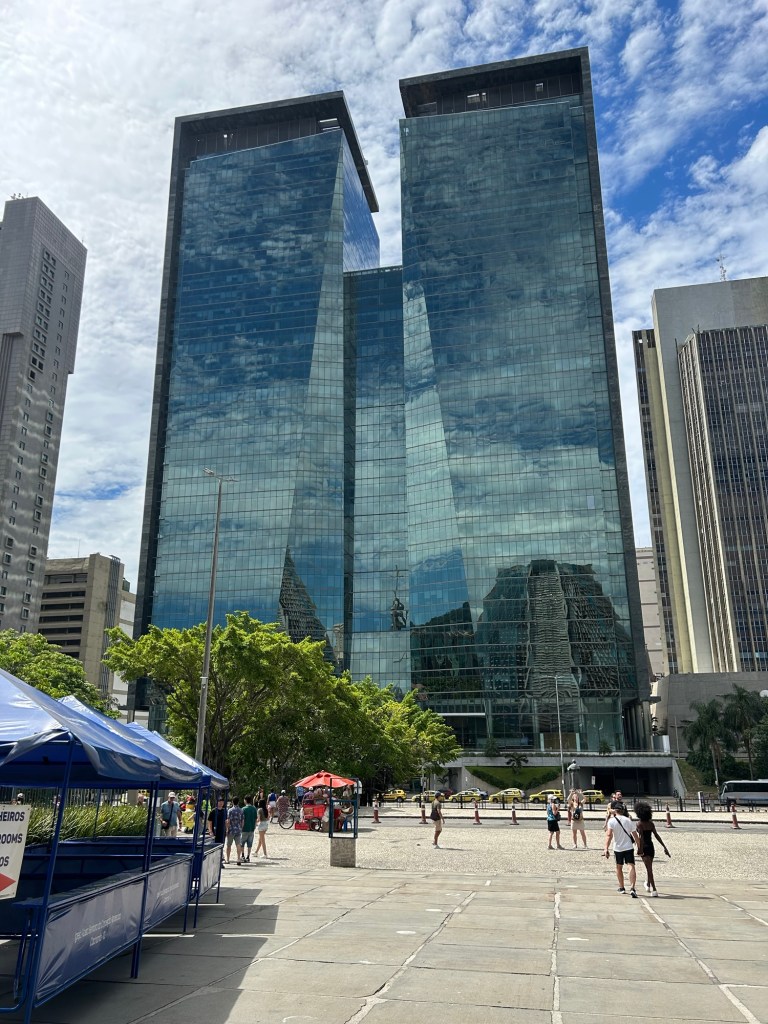
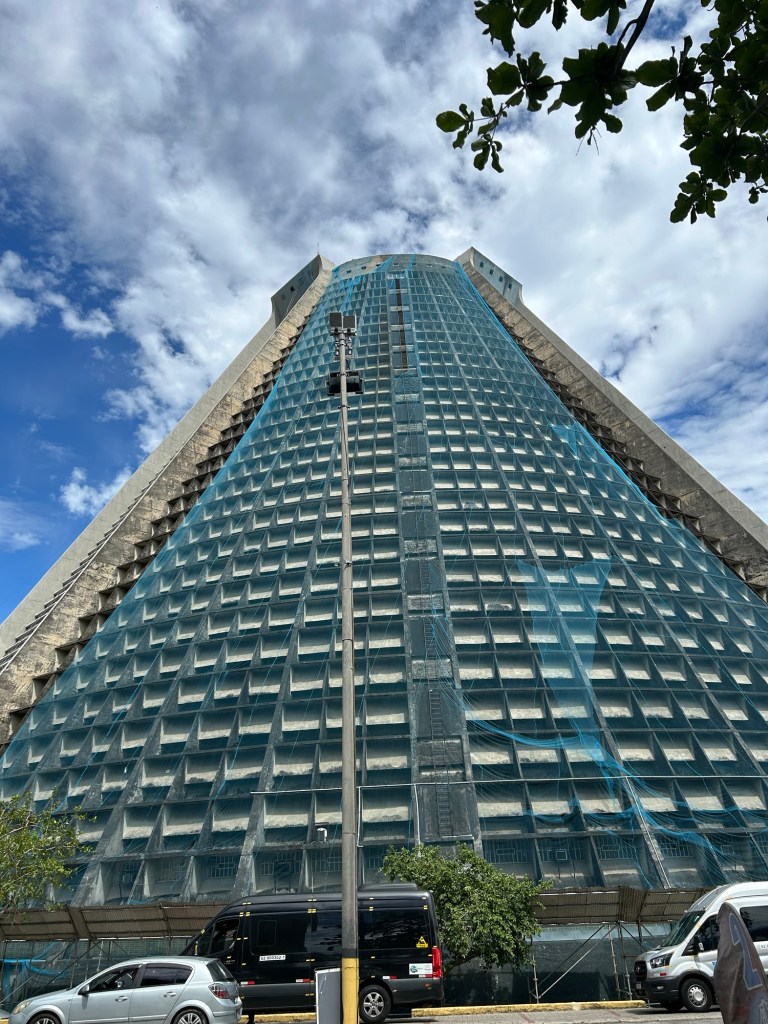
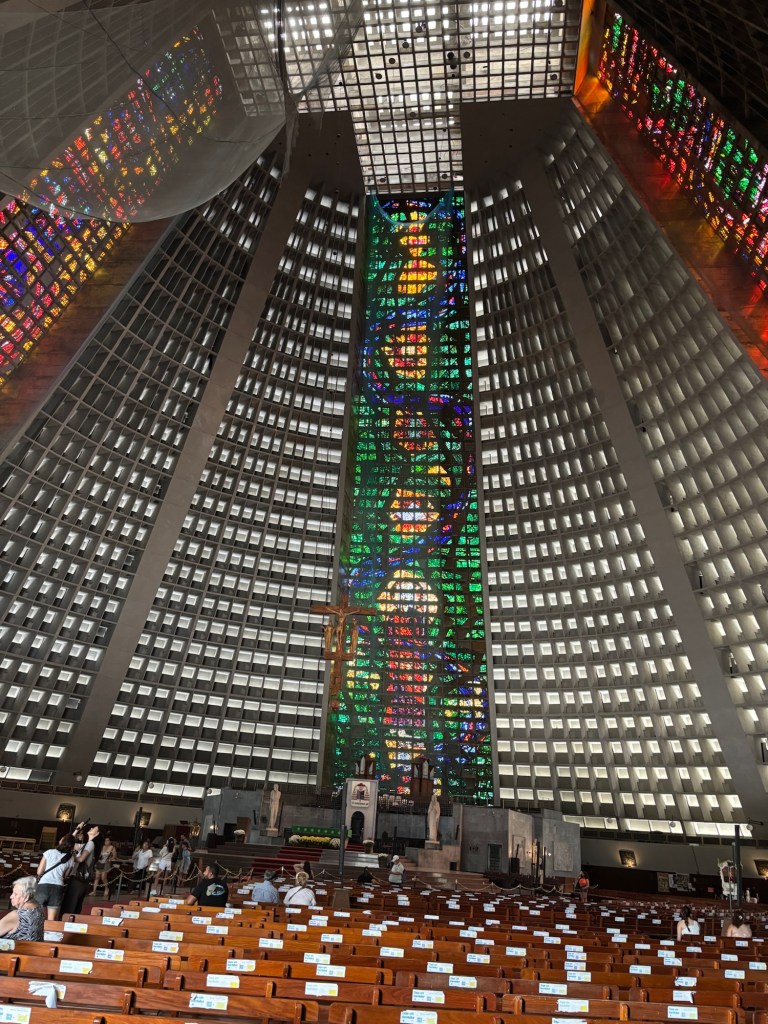
“What an unusual shape for a catholic church,” I thought as we approached The Metropolitan Cathedral of Saint Sebastian, better known simply as “The Cathedral”. Its style was based on the shape of a Mayan pyramid, and the building has a diameter of 315 feet. The inside has seating for 5,000 with a standing room capacity of 20,000.
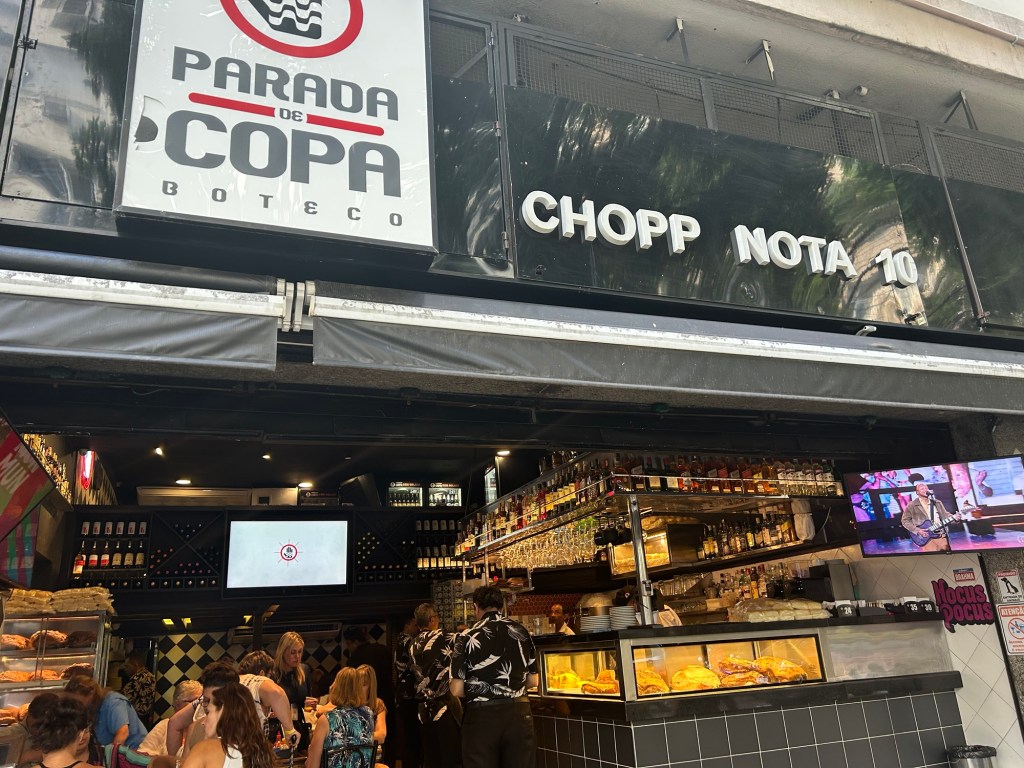
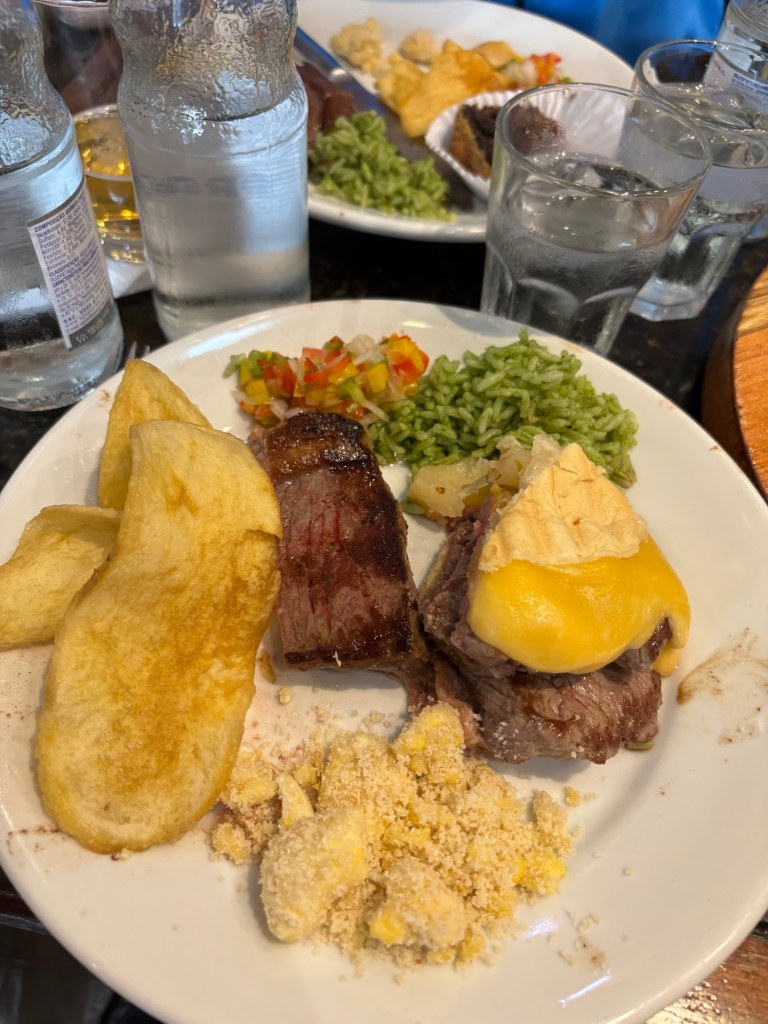
Our tour guide took us to her favorite local restaurant for a late lunch. As in all Brazilian restaurants, meat is the star and there was plenty of it! She recommended a sandwich with thin slices of prime rib, cheese, and grilled pineapple. So yummy!
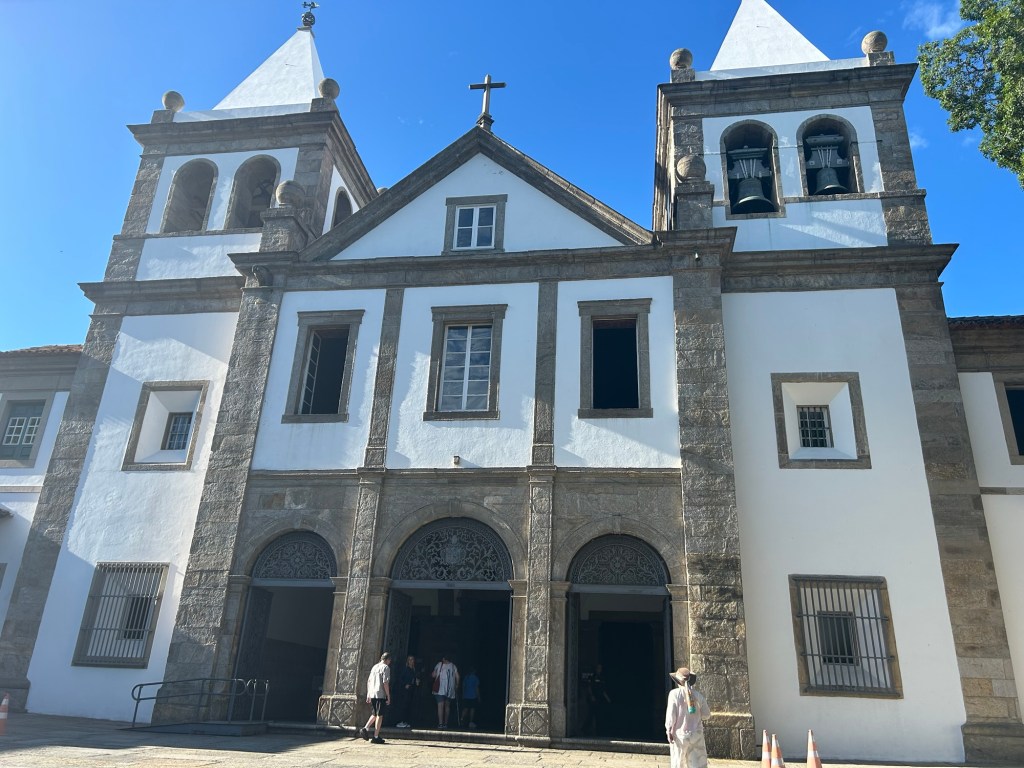
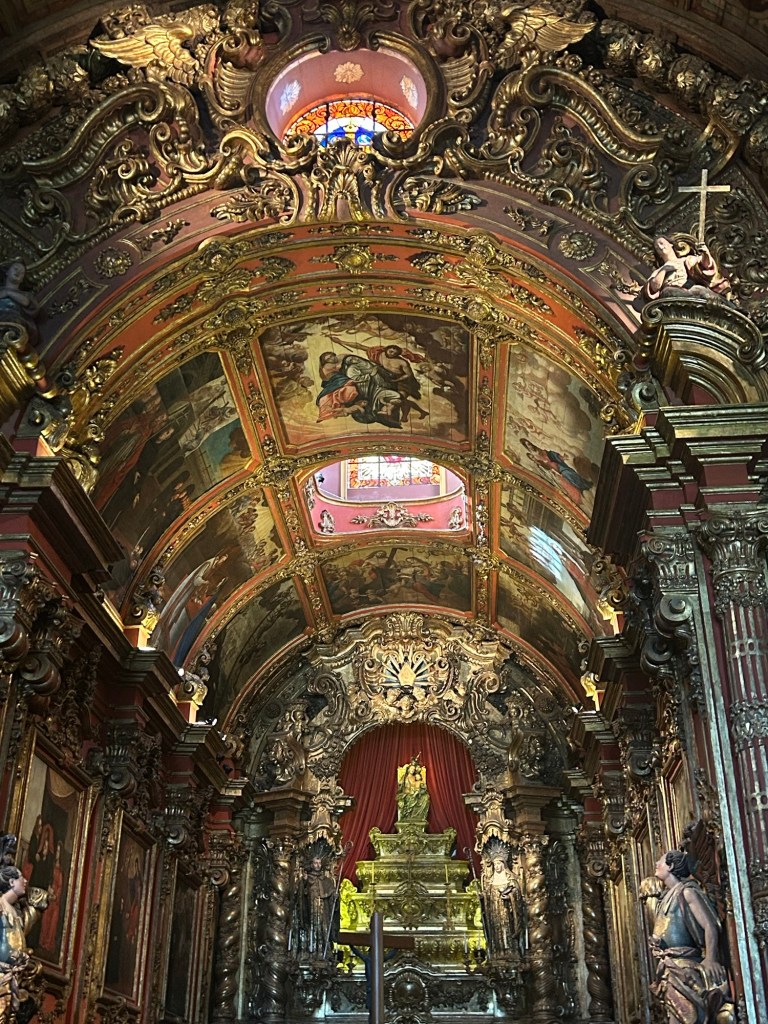
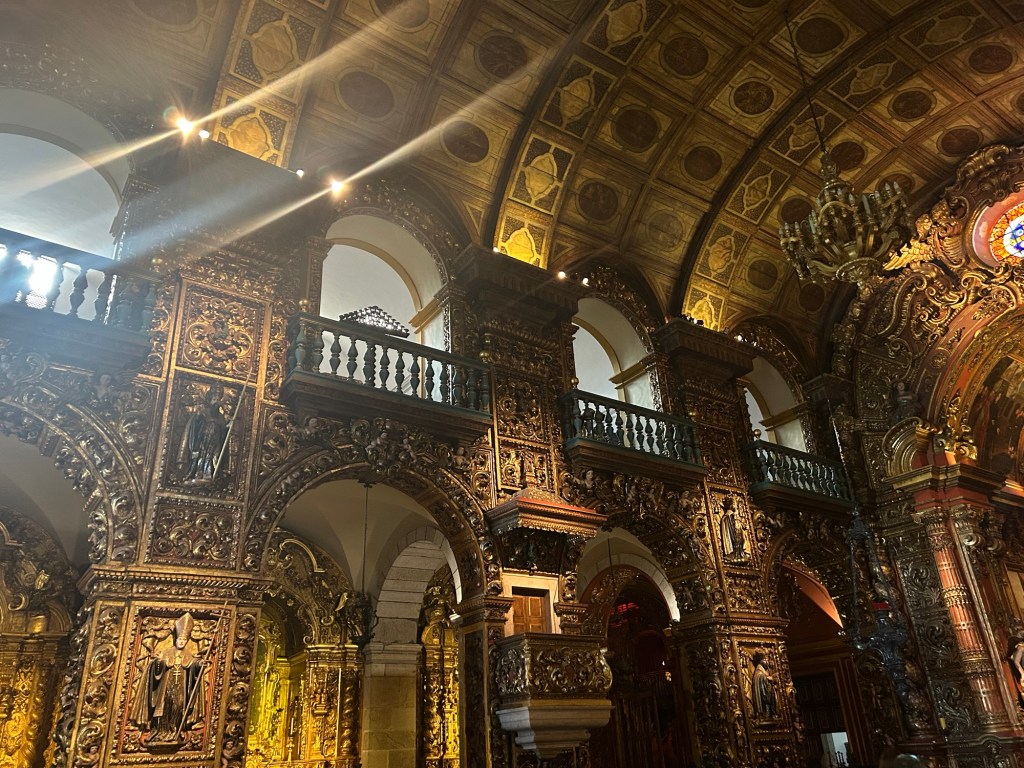
Our last stop of the day was at the Monastery of Saint Benedict, an example of Portuguese colonial architecture built in the 1600s. The interior has ornate gold-covered carvings, sculptures, and paintings from the 1700s and 1800s. This Benedictine monastery still holds Sunday services with Gregorian chants.
As we headed back to our ship, I reflected about my Sunday. I had been at three places of worship: the Christo Redentor statue, the modern Cathedral, and the centuries-old Monastery. Two were just places to visit; only one, Christ the Redeemer, made me feel, think, and reflect.
 Travels with Irene
Leave a comment