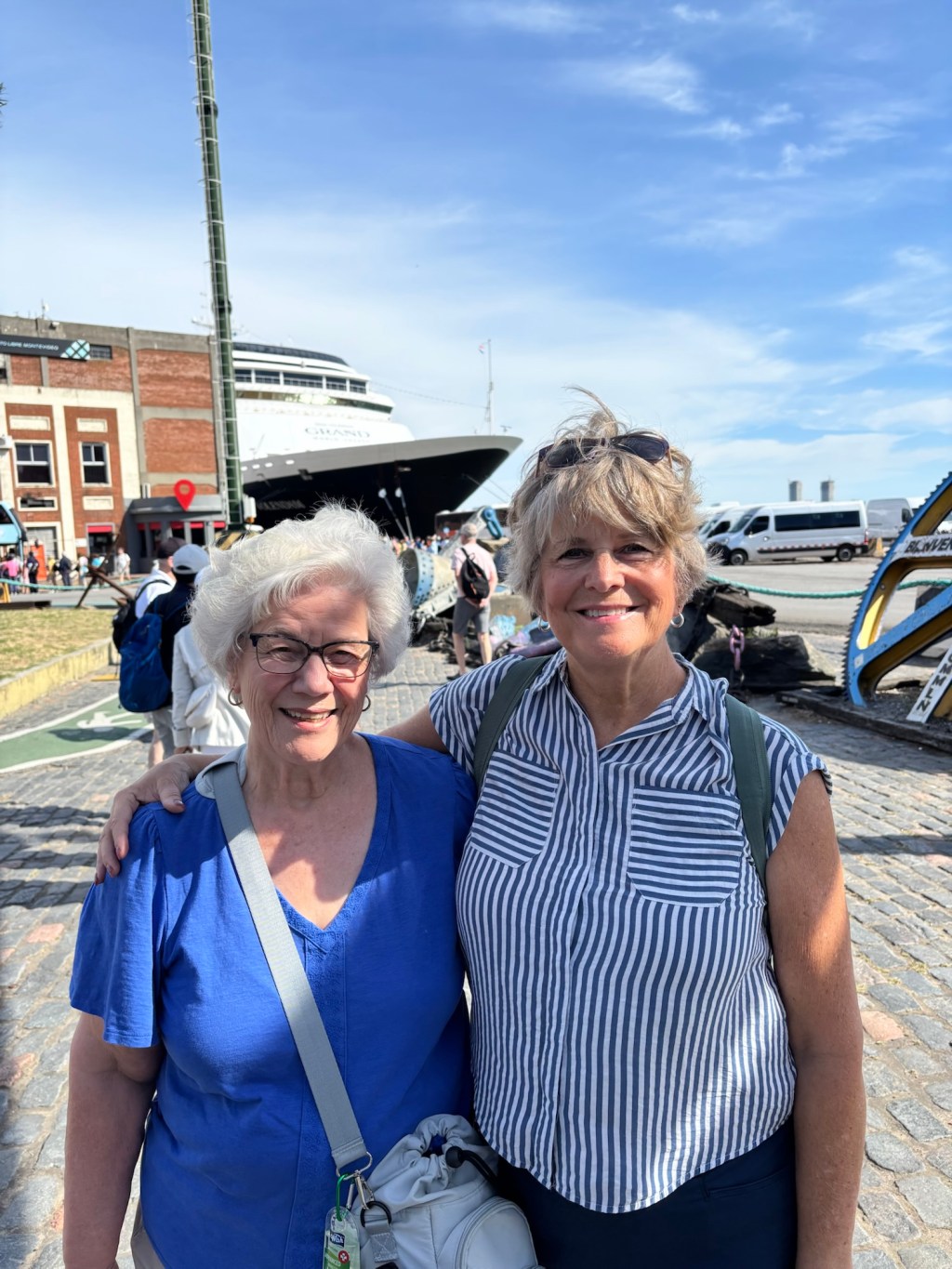
I boarded the Uruguayan tender tied to the temporary gangway of the moored Volendam for the 20-minute ride to Punta del Este, a resort town on a peninsula of Uruguay. The harbor was too shallow for our ship, so small local boats (tenders) and some of the ship’s life boats were being used to ferry us to the dock and cruise terminal.
As the tender sped forward, I sat on the outside deck, alone with my thoughts. “Uruguay. Who would have thought I’d be here? I know nothing about this tiny country. It’s only been a small space on a flat map hanging on my wall.” As the day progressed and as I spent another day in the capital of Montevideo, I realized I was seeing this beautiful country in 3-D and technicolor, with its people, places, sights, and smells blending into a montage of a safe and stable country.
Tucked between Brazil to the north and Argentina to the west, this tiny country of nineteen departments (states) and three million residents has a stable democracy compared to the economic and political instability of both its neighbors. The tour guides we had in both the resort area and the city shared their pride in their democracy. All residents MUST vote in an election or they are fined. The residents pay high taxes, but enjoy free health care and education.
The country exports produce and meat, especially beef. As our guide said, “We grow good hay, so the cows are happy, and our meat is very good!” During both the world wars, Uruguay shipped a lot of meat to countries like Spain and Italy which were desperate for food. As a result, after World War II, there was a large influx of immigrants from those two countries.
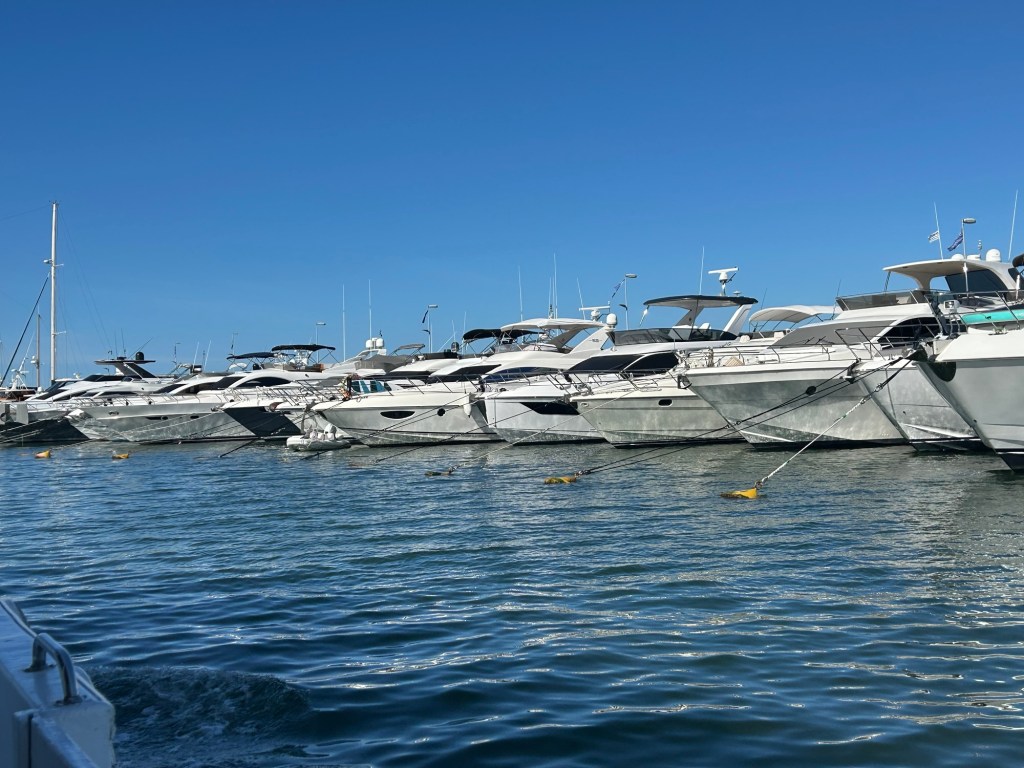
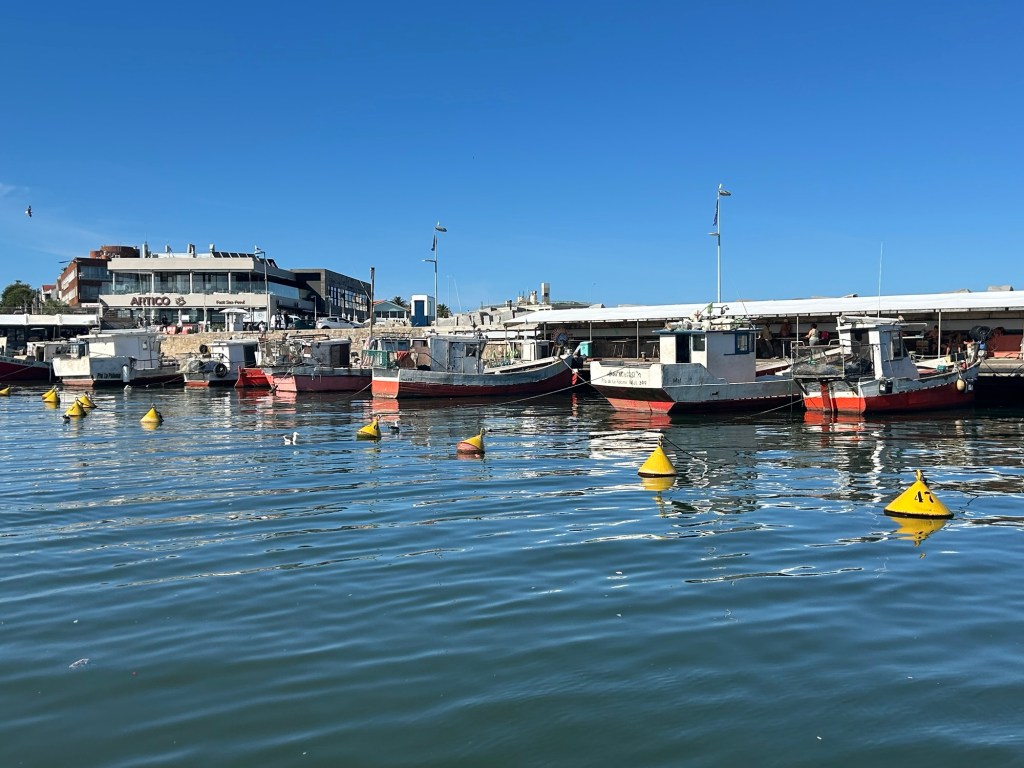
Punta del Este, meaning “eastern point”, is an upscale resort and beach town on a peninsula with thirty-one miles of waterfront. We saw both sleek yachts and old fishing dinghies as we tendered into the harbor.
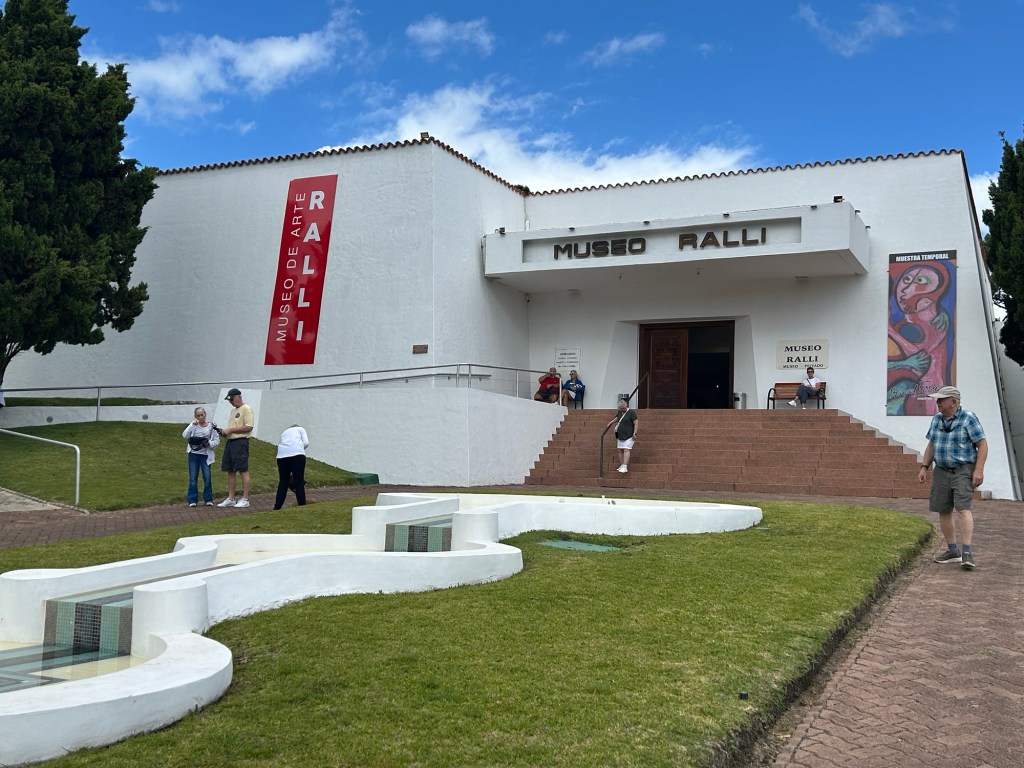
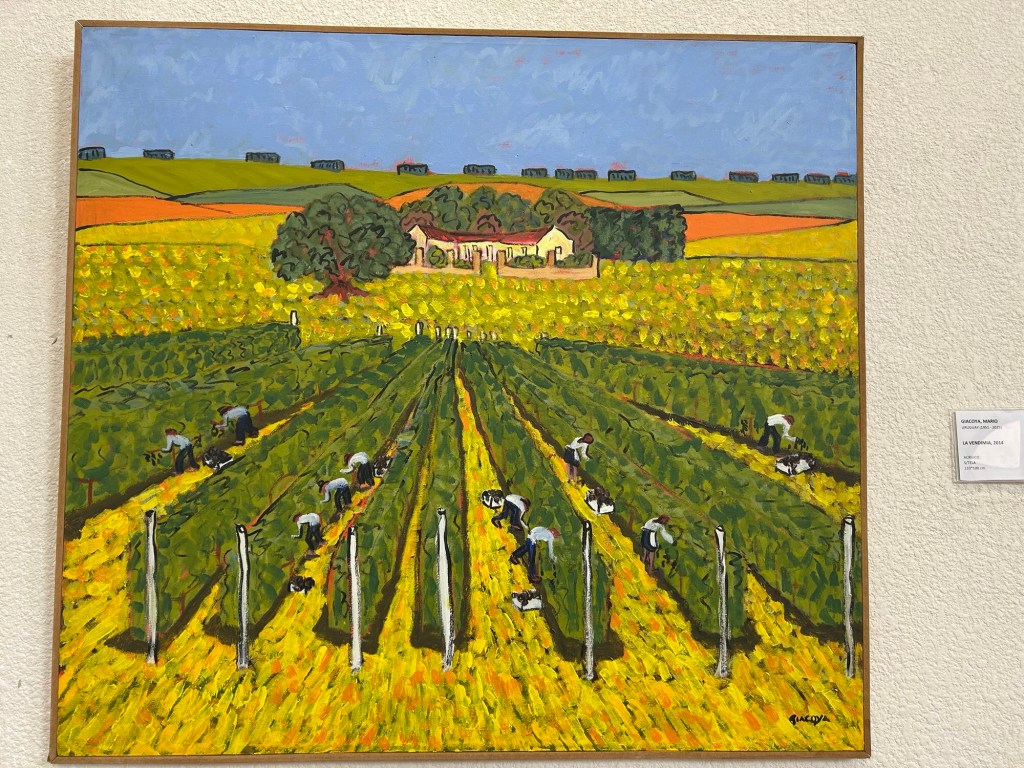
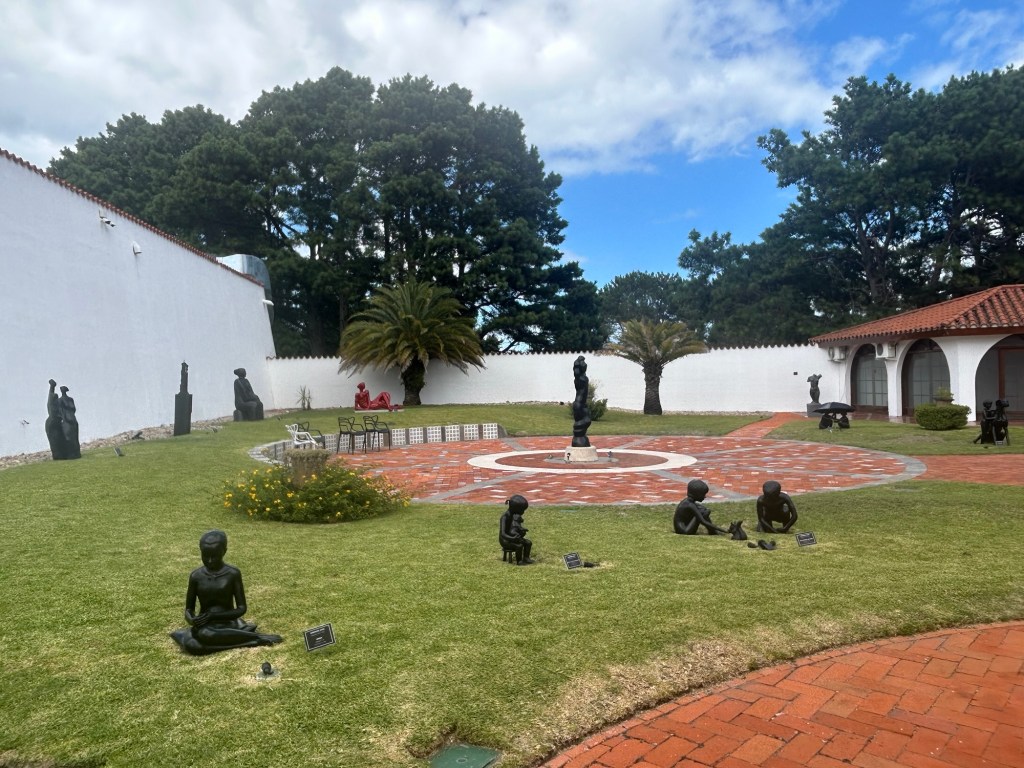
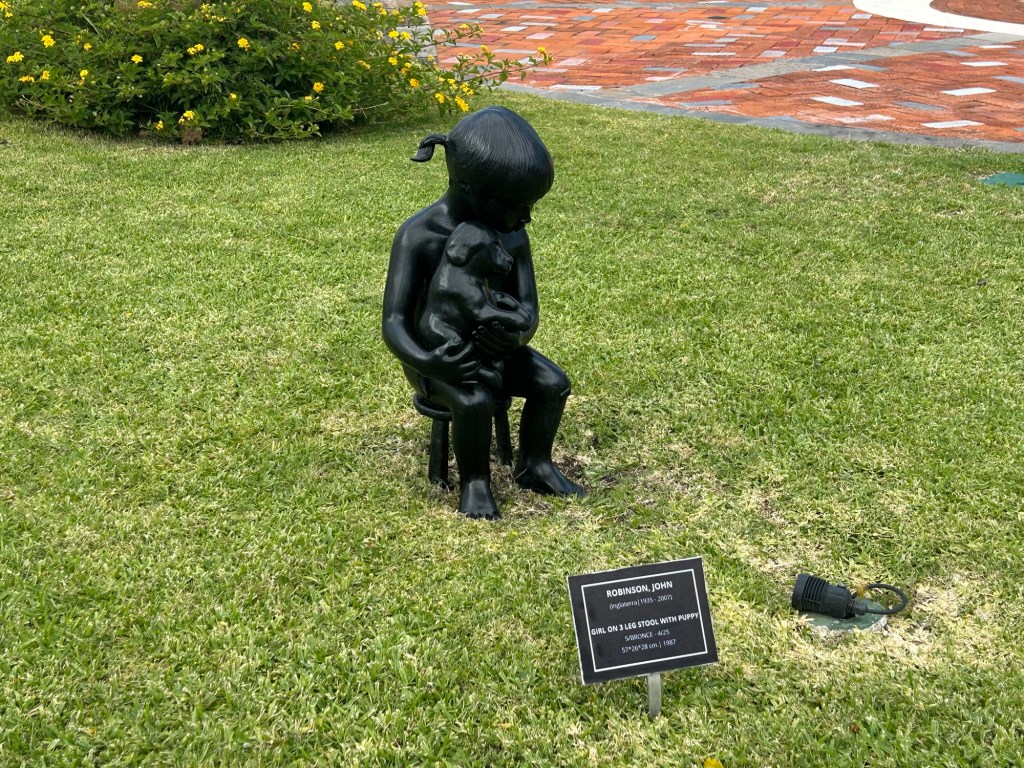
Ralli Museum houses the art collection of the Recanati family dedicated to promoting the paintings and sculptures of Latin American artists, including Salvador Dali. We enjoyed visiting the galleries as well as the outdoor sculpture courtyards.
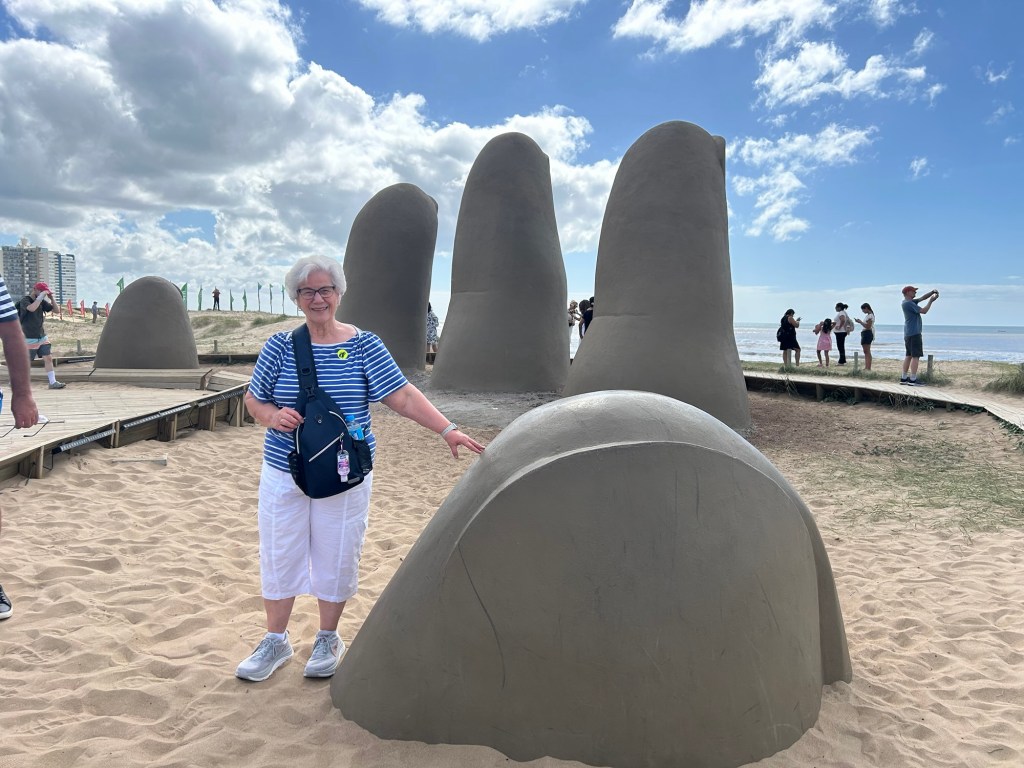
I had previously read about the iconic La Mano “The Fingers” sculpture at Brava Breach, so I was pleased our tour included a stop there. The five fingers emerge out of the sand supposedly as a warning about the beach’s strong waves, but others have suggested a more esoteric symbolism.
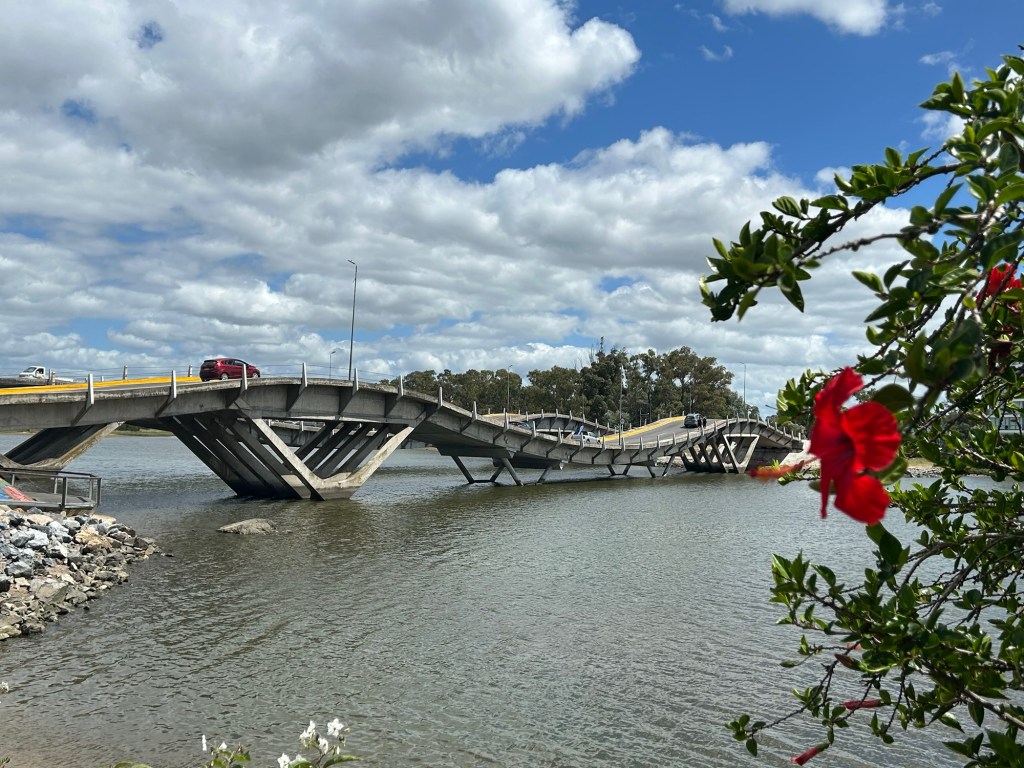
Another memorable landmark of this city is the Puente de la Barra, which is better called The Wavy Bridge. Heavy trucks and buses are not allowed on this ripple-shaped bridge built in 1965. I enjoyed walking under it!
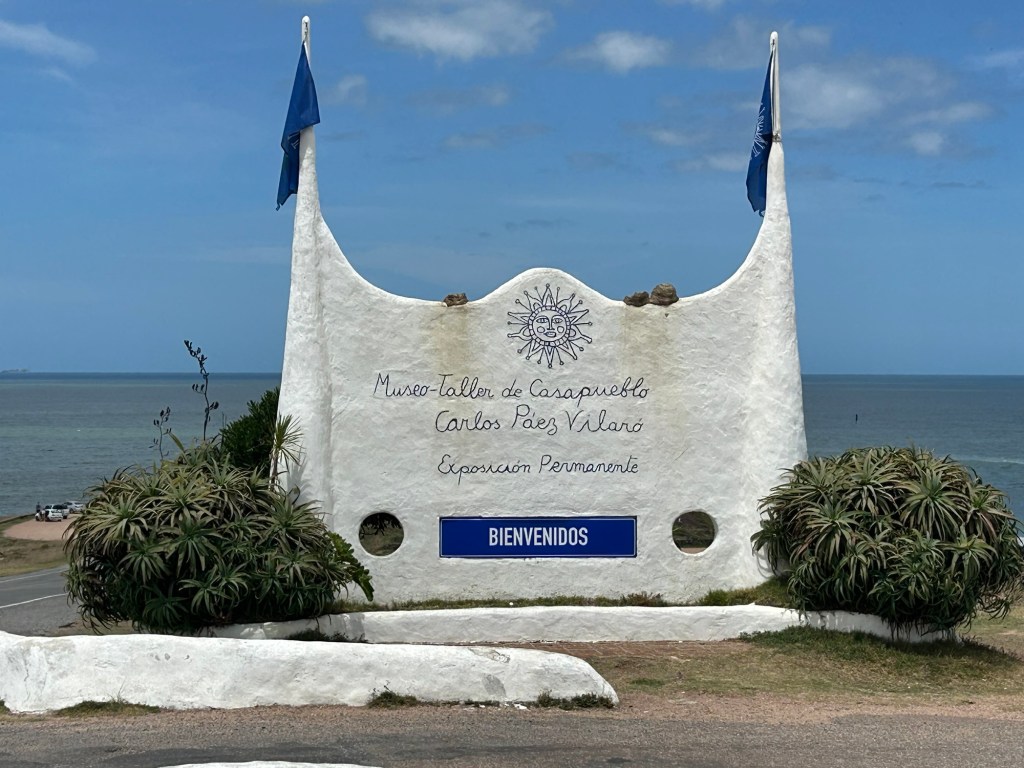
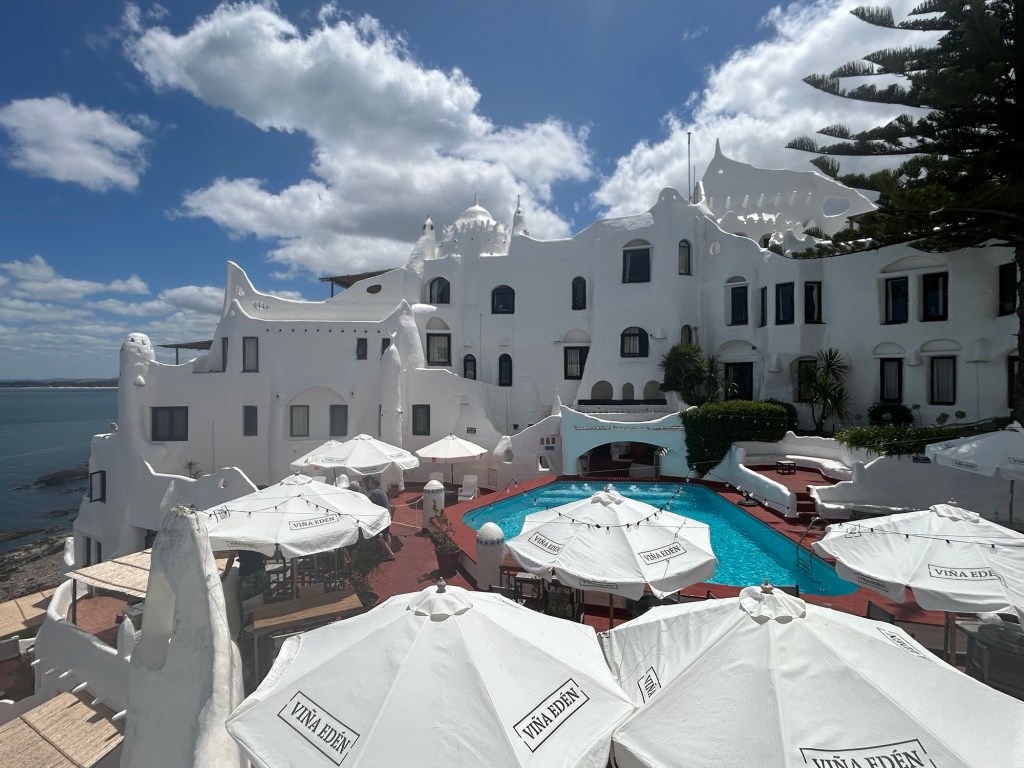
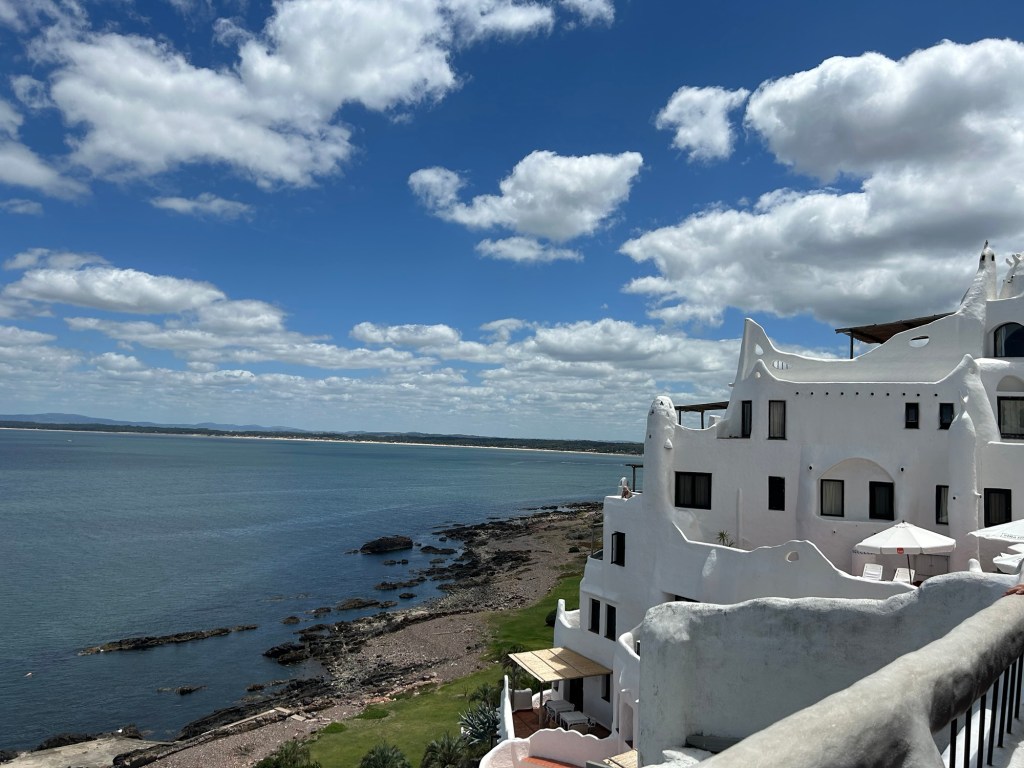
Casa Pueblo was the summer home of a local artist, now a hotel and museum. The owner built it over thirty-six years without a plan. The final result is a labyrinth of halls, small stairways, doors and window with an unexpected result at every turn. But the views to the beach were spectacular.
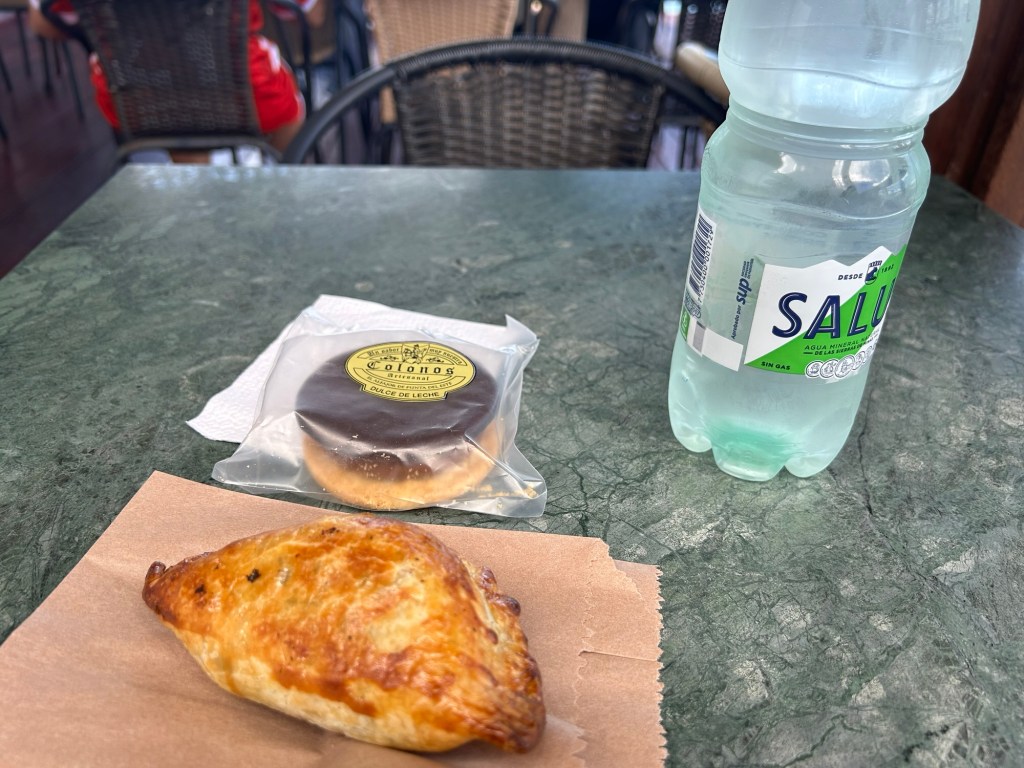
I was pleased I could order a little lunch of an empanada and alfajor, both traditional local foods, without knowing the language. Both the hand-held beef pie and the sandwich cookie filled with dulce de leche were delicious, of course.
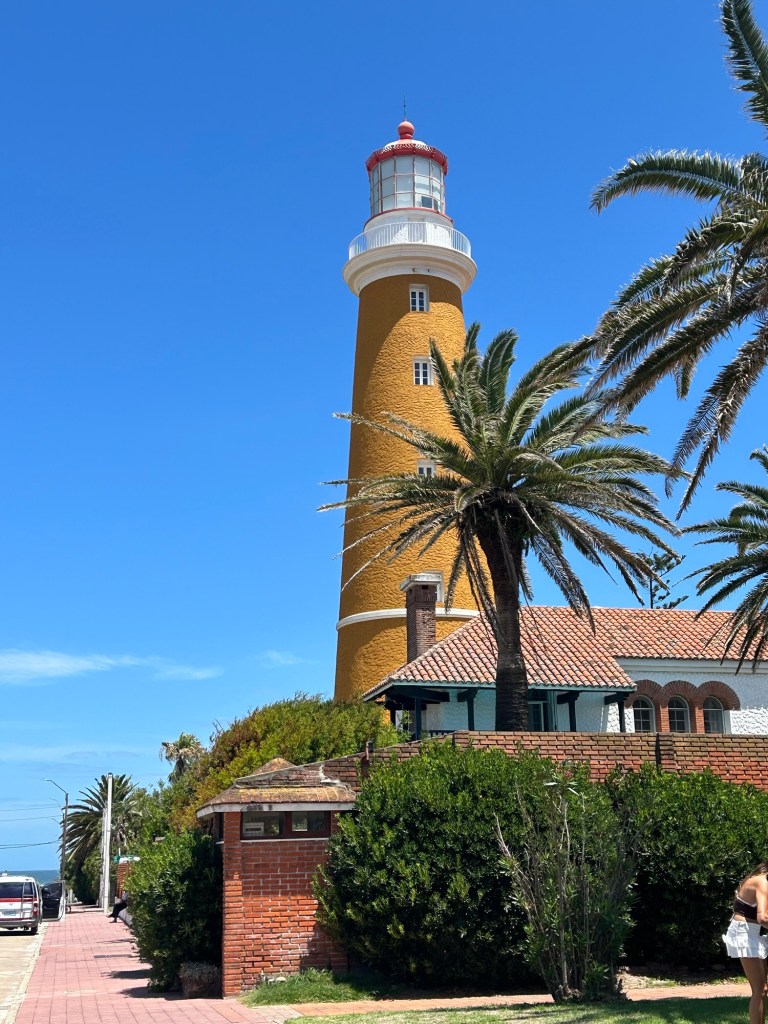
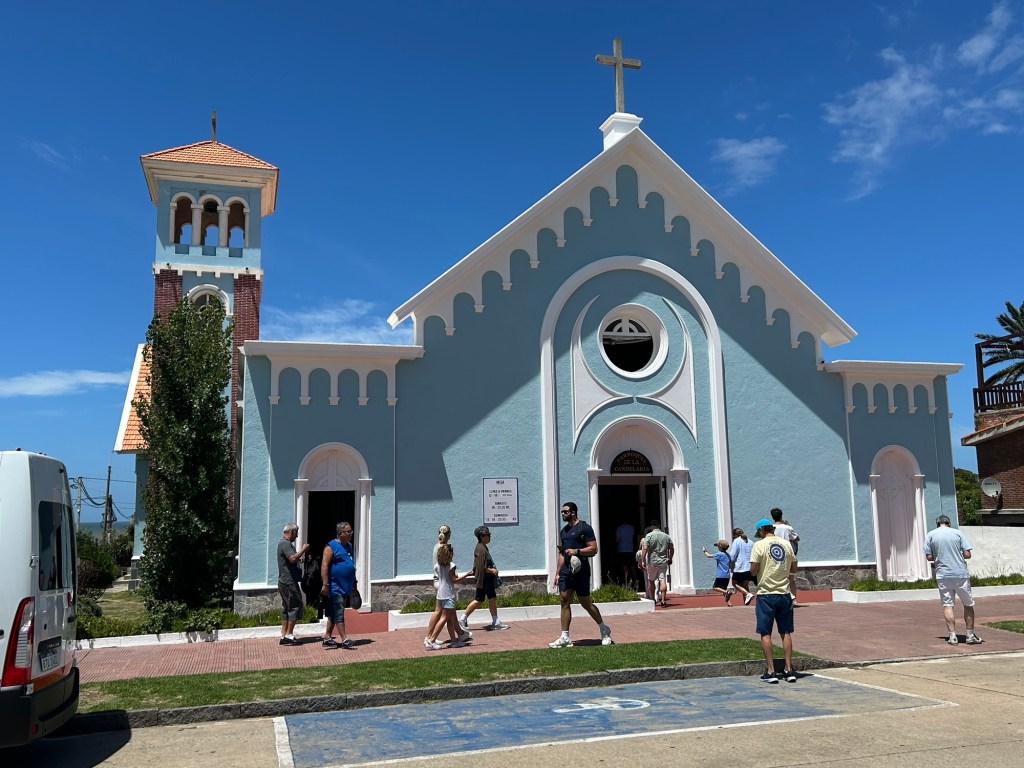
We ended the afternoon with a walk around the town to the lighthouse built in 1860 and a Victorian style church, our Lady of Candelaria.
We tendered back to the ship, after a delightful day in a friendly, welcoming, clean town. My niece and I were both impressed with the small section of Uruguay that we had experienced.
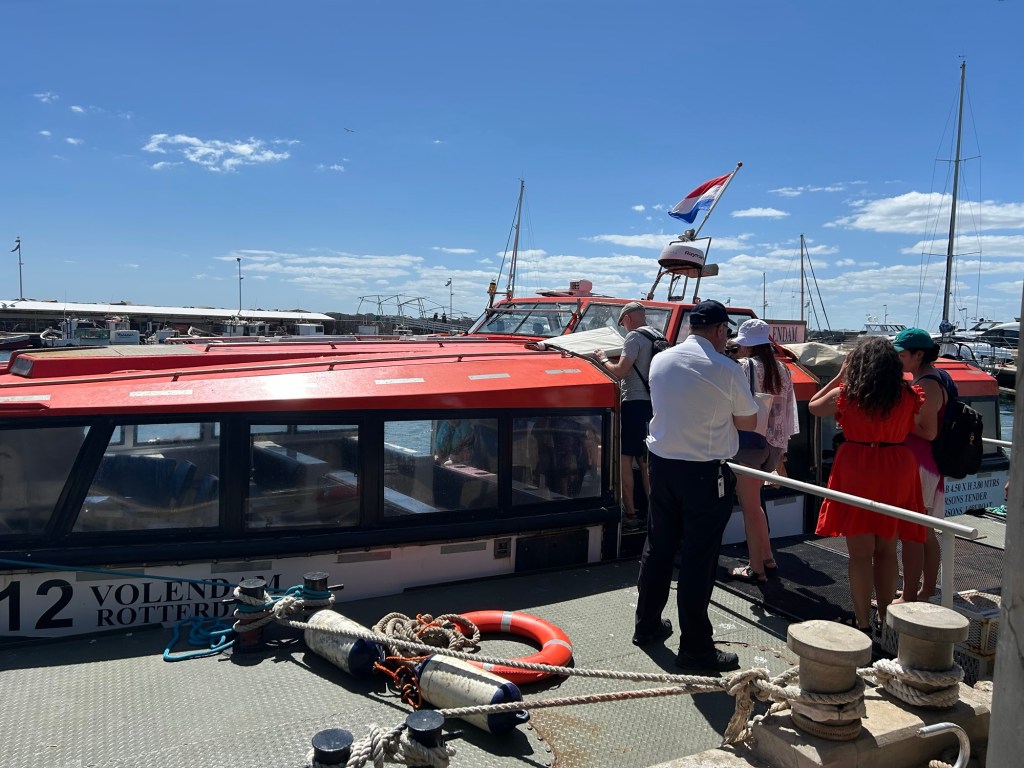
Getting on the tender
Two days later, we arrived at the capital city of Montevideo to experience another part of this country so small that forty-five Uruguays could fit inside one Brazil. Uruguay has 410 miles of coastline, over 200 of which face the Rio de la Plata which separates the country from Argentina. This river is 130 miles wide at its mouth, the widest river in the world.
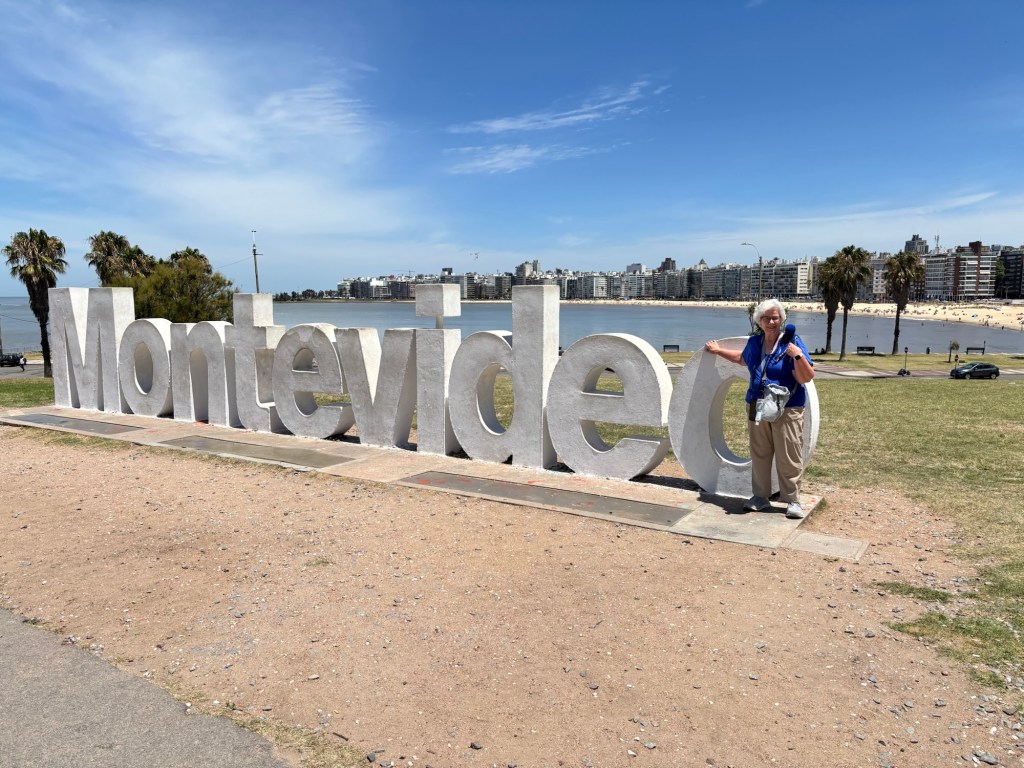
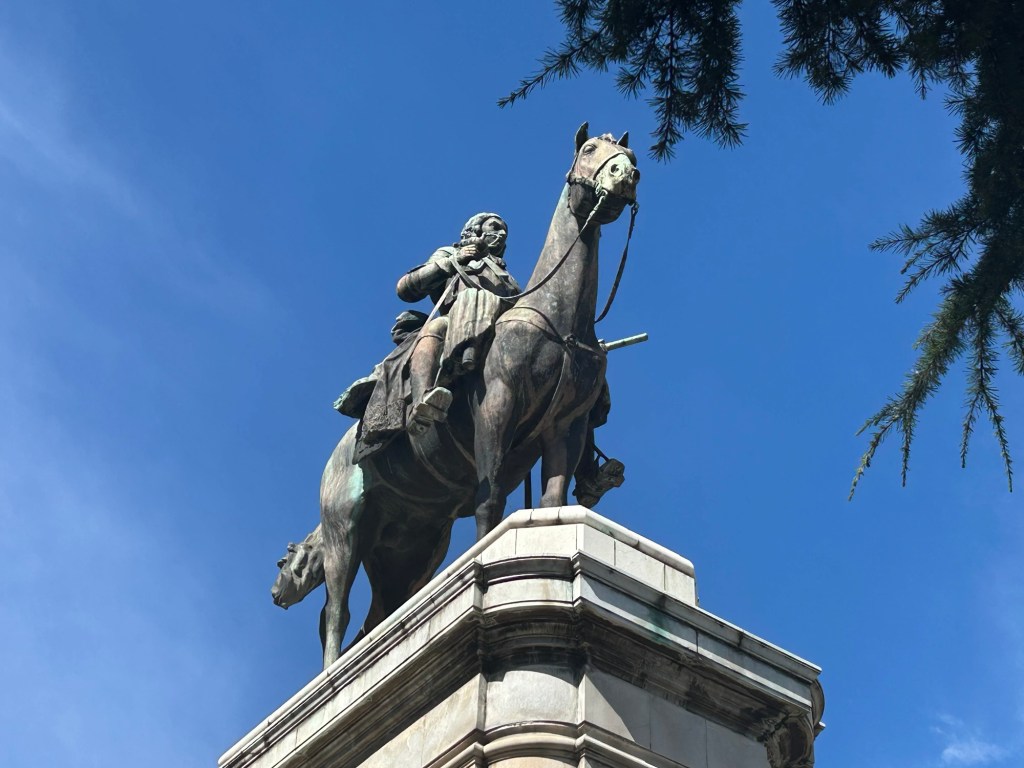
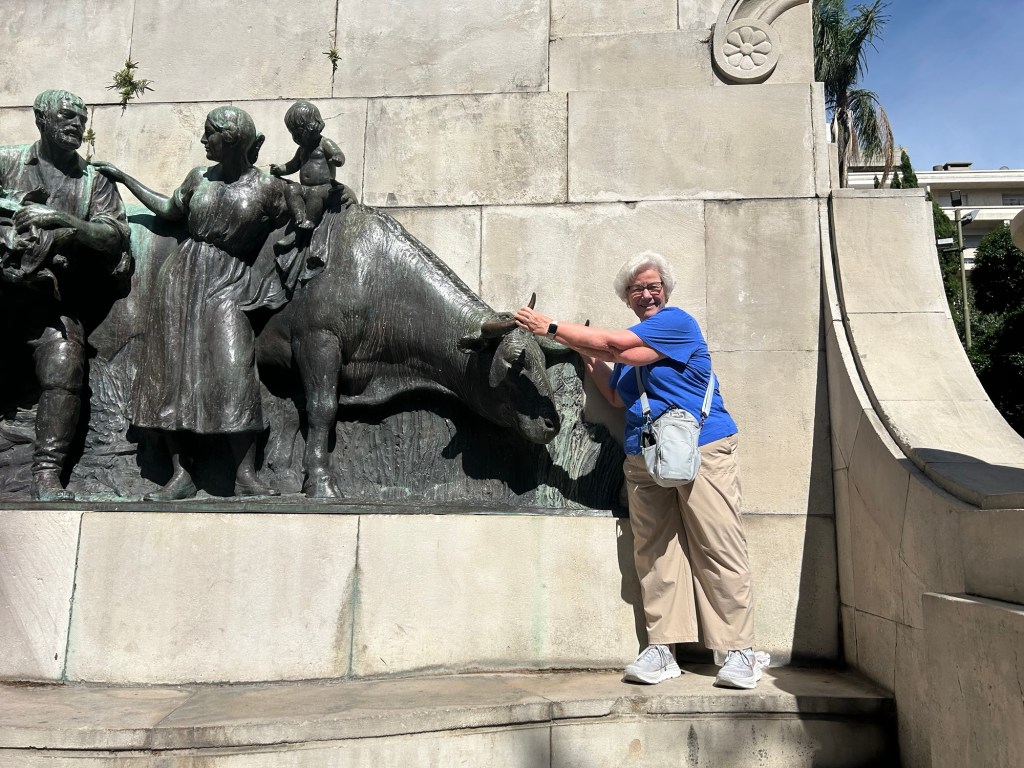
The large public square, Plaza Zabala, features an impressive statue of the city’s founder, Bruno Mauricio de Zabala.
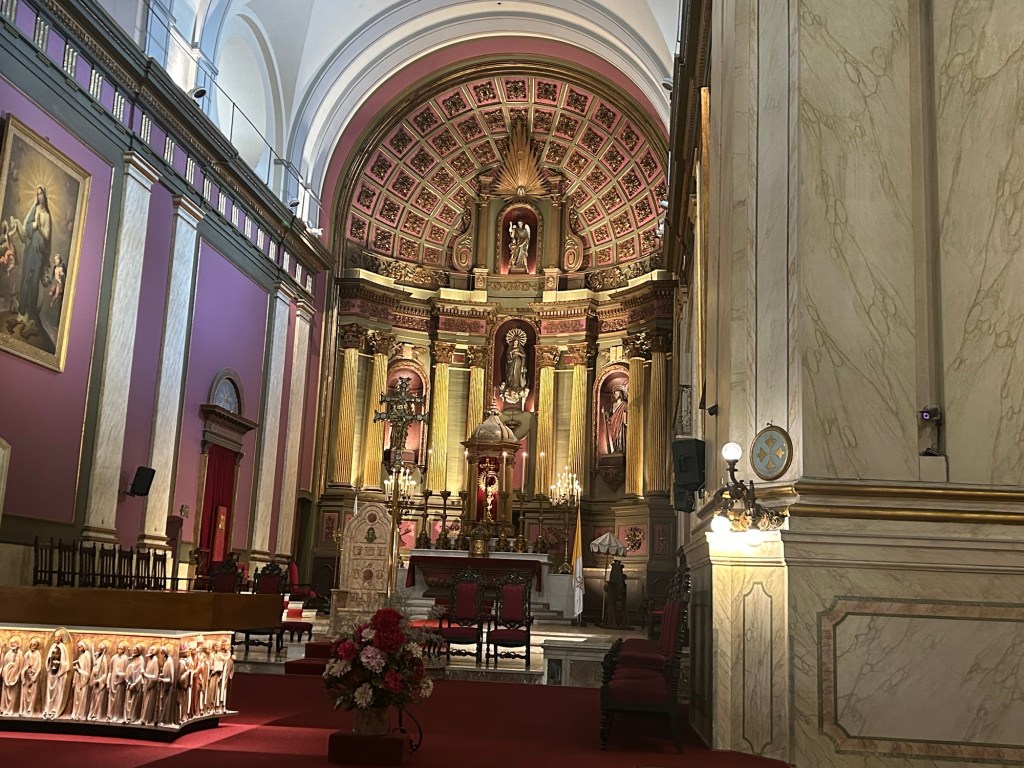
We stopped in the Metropolitan Cathedral built in 1804.
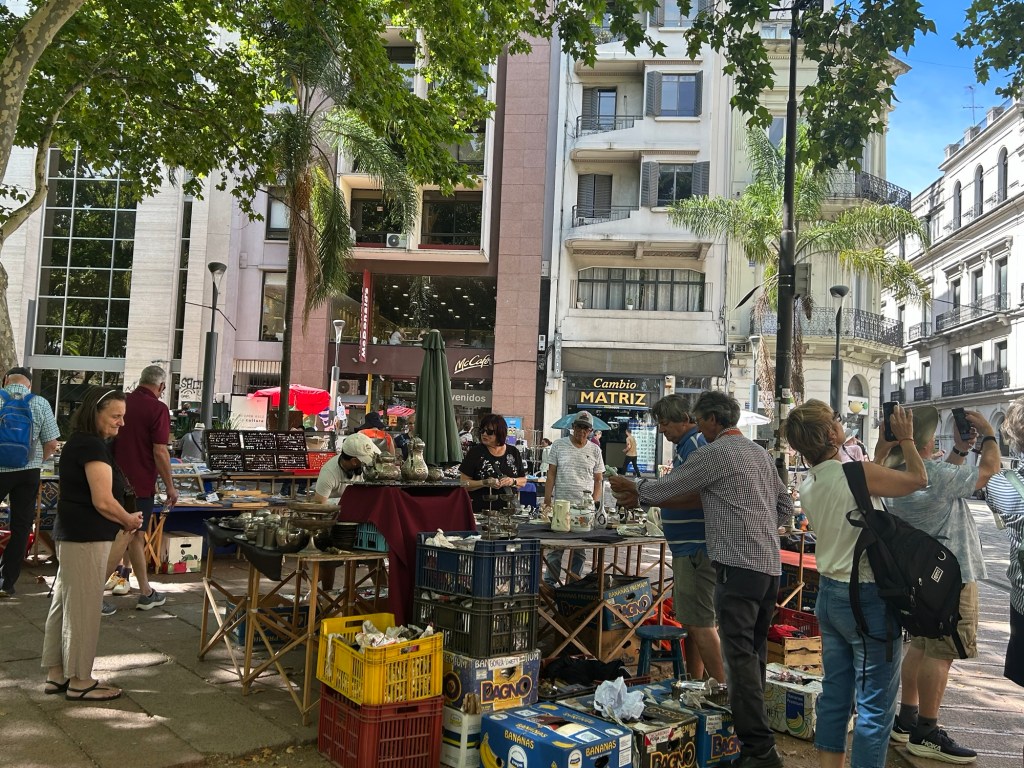
Of course, we couldn’t resist visiting a Sunday Flea Market in Constitution Square, another public park space.
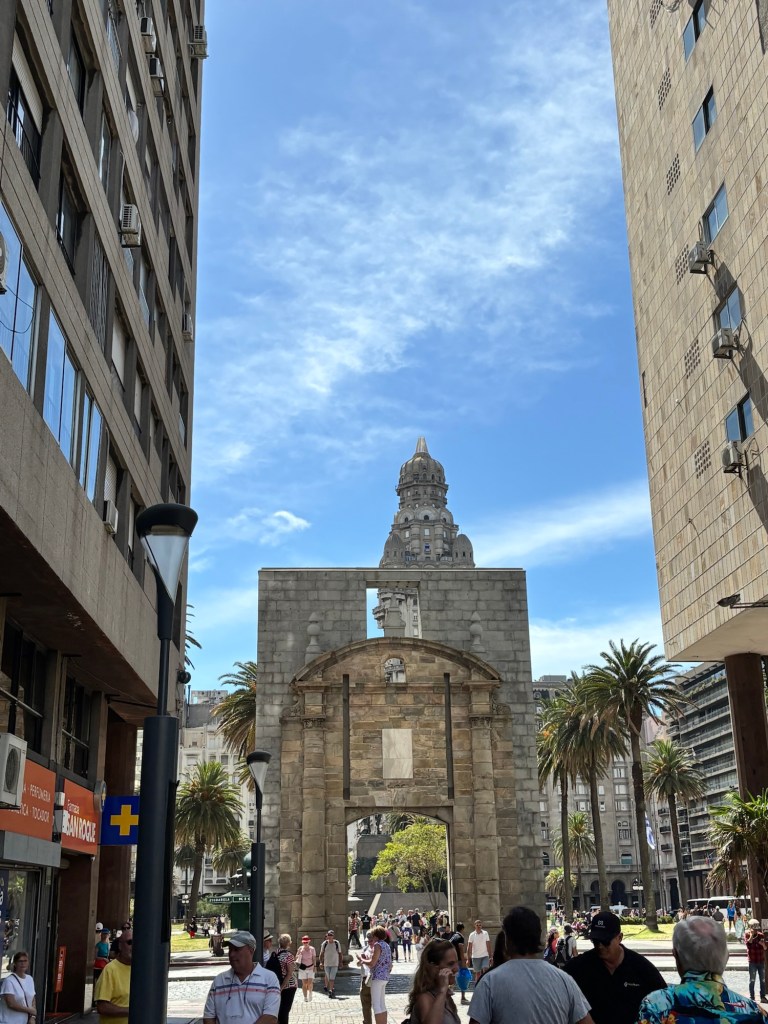
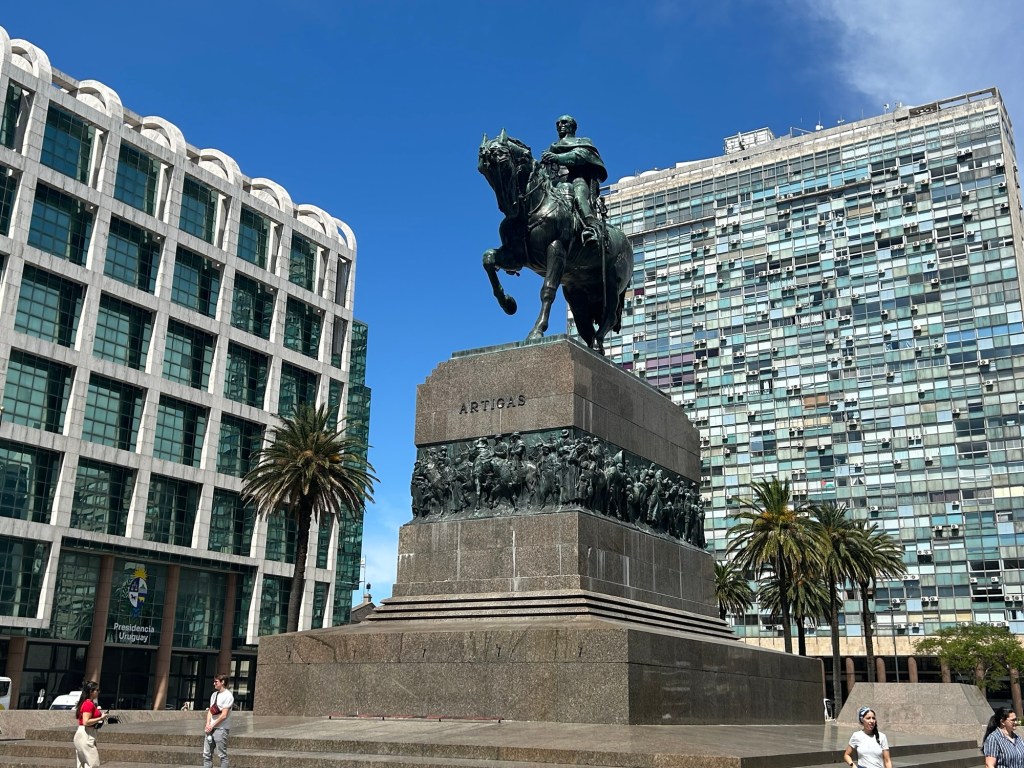
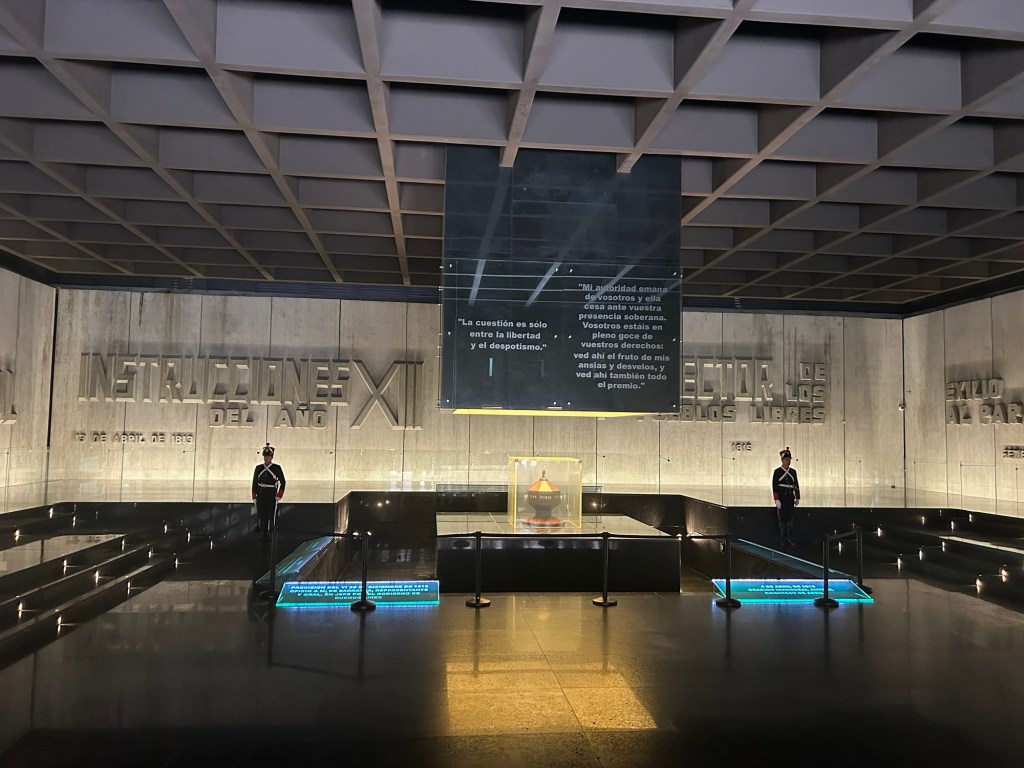
Independence Plaza, the most important plaza in Montevideo, divides the old city from the new. It honors the country’s national hero, Jose Artigas, who is revered as the “father of the nation”, similar to our George Washington. His underground mausoleum in the plaza is guarded by members of a special military regiment.
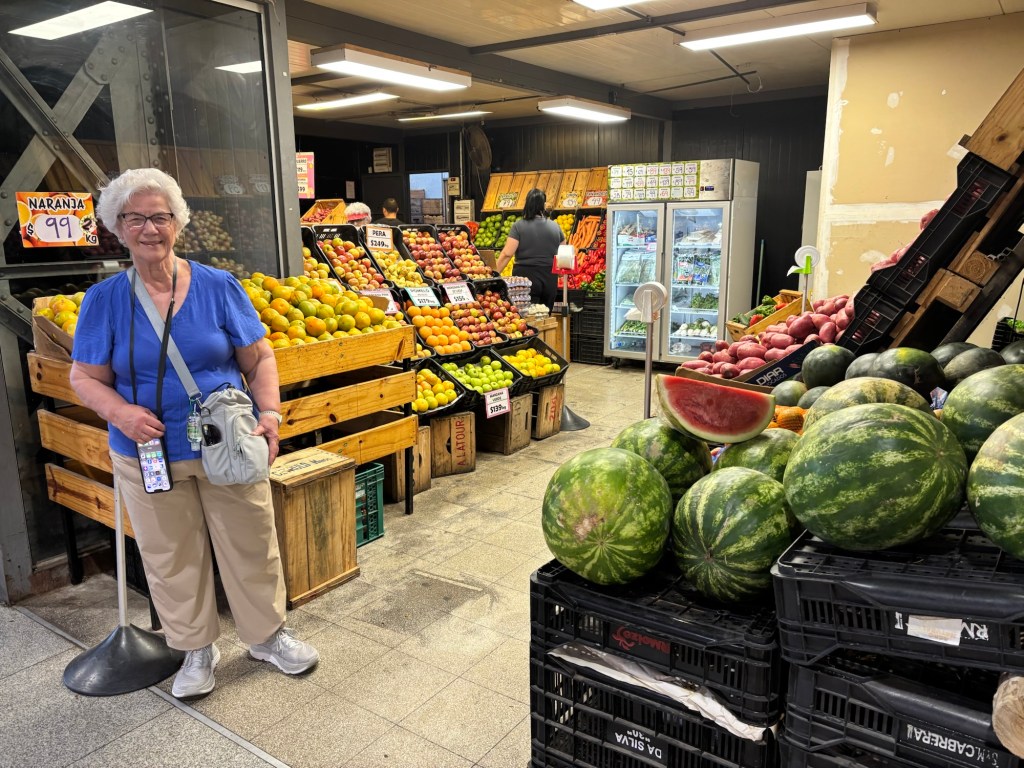
Our favorite stop was the Farmer’s Market (Mercado Agricola) located in a restored 1913 building and filled with over a hundred stalls. Local residents buying produce and meat for their families mingled with tourists who wanted to grab a few local snacks and drinks.
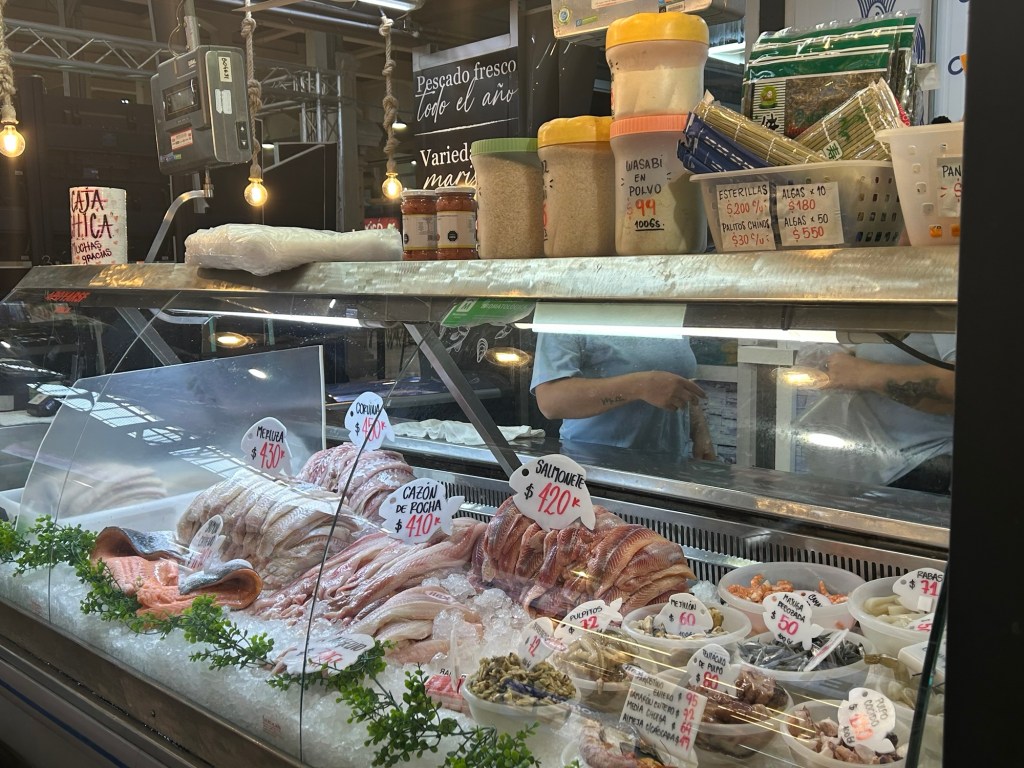
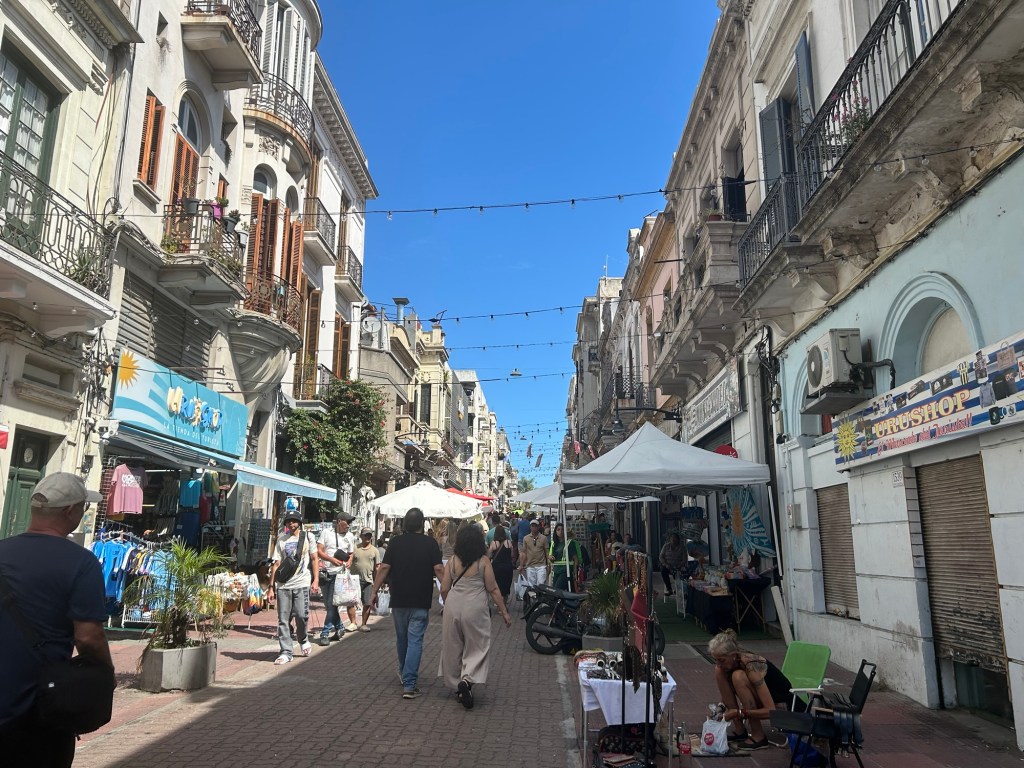
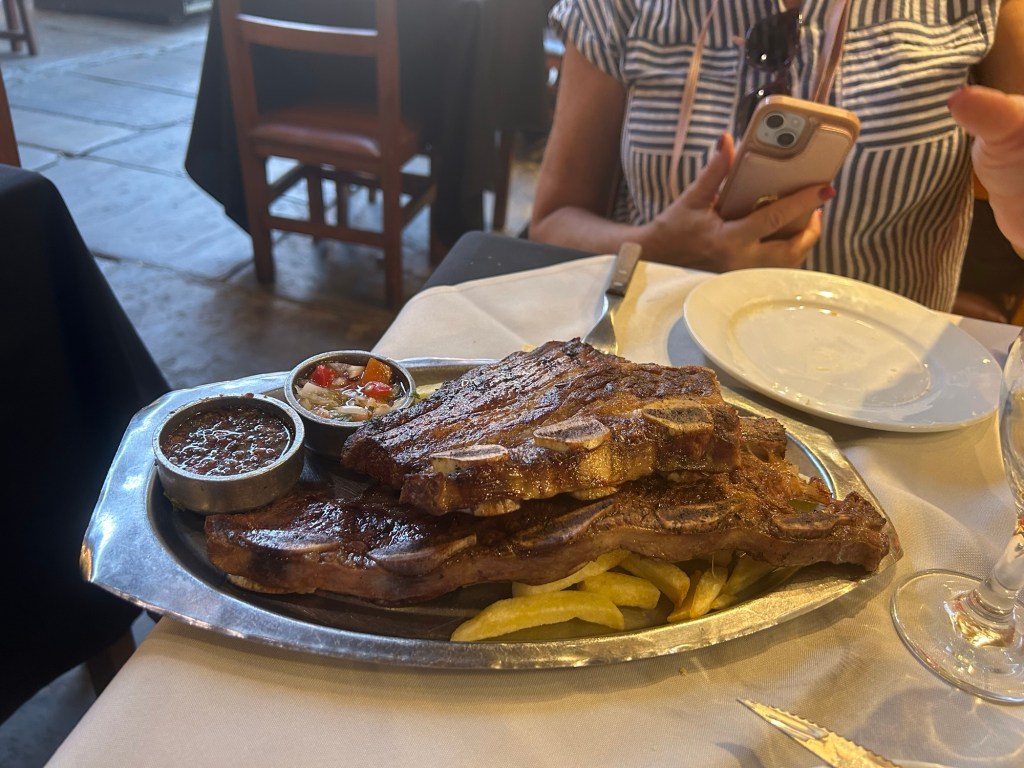
When the tour ended, we joined other tourists on the Pedestrian Street (no cars allowed) near the port market (Mercado Del Puerto) to browse the many shops. At the hub was a covered market filled with restaurants featuring local food, especially asado, beef cooked over open fires. We shared one meal, and it was more than enough for the two of us.
As we walked toward the Volendam on the pier, I reflected on my two days getting a glimpse of this small country. Snapshots of what I’d seen popped up in my mind. And I wondered how much more aware I will be of this and other South American countries when I eventually return home. Where I am now traveling is becoming part of my view of the world. Countries that were just names to me, I now think of as specific people I’ve seen who live, work, play, and learn. My world is expanding.
 Travels with Irene
Leave a comment